An announcement with limited access for now
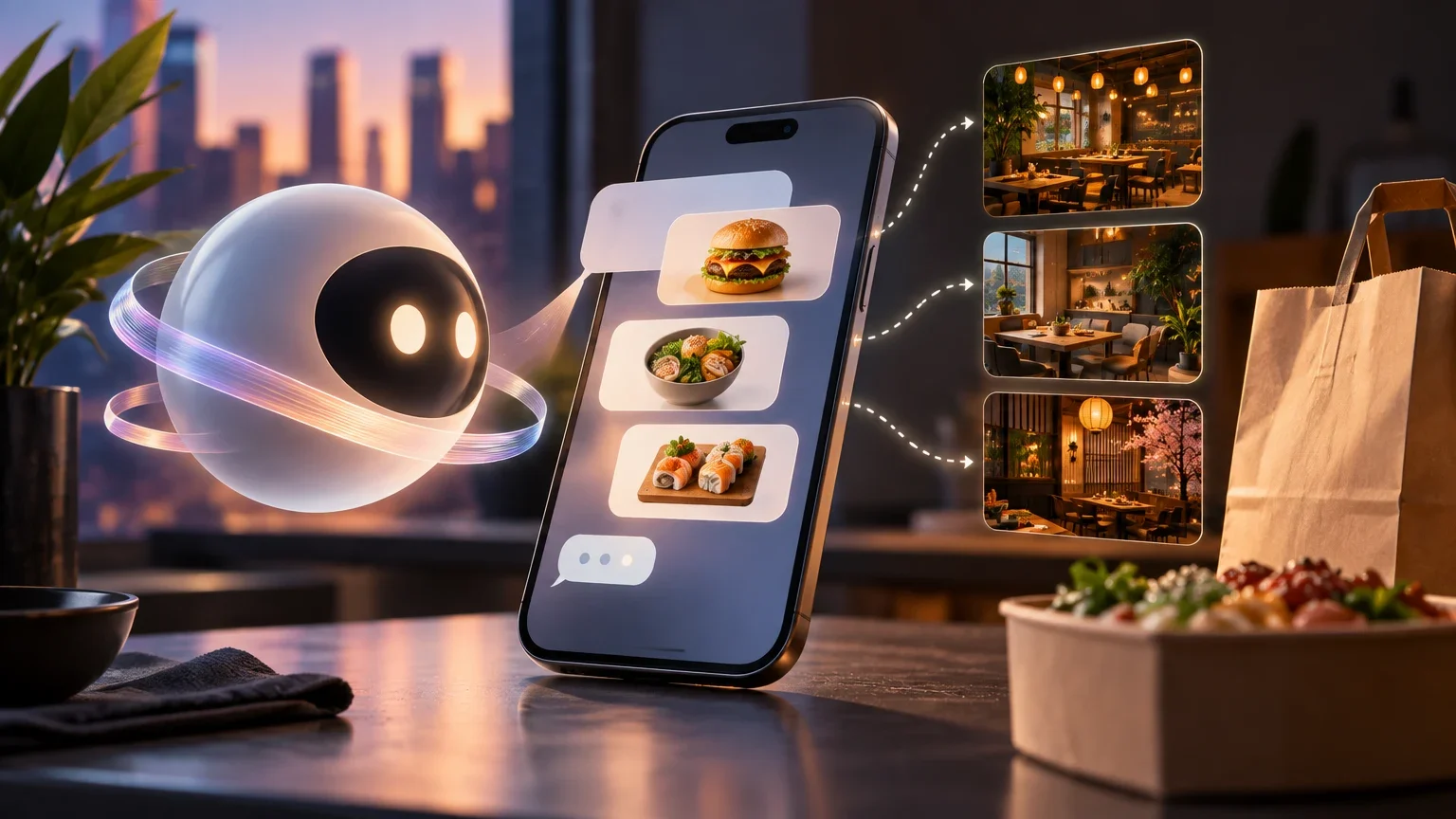
DoorDash has announced an artificial intelligence agent for ordering food through messages, along with an API designed to handle bulk orders. The available information says the company has opened waitlists in the United States for both products. That means they can be described as announced initiatives with access still limited—not as services that are generally available.
The consumer-facing offering is integrated with Apple Messages, according to coverage of the announcement. The other tool is intended to let third-party assistants manage larger orders. A Slack bot is one example mentioned, although the available material does not explain which integrations are already working or whether the example describes an available connection or a possibility DoorDash has proposed.
The distinction matters: joining a waitlist does not mean someone can already place orders with the agent, nor does it say when access will be granted. An announcement also does not confirm that every feature is operational. No general-access date, eligibility requirements, trial terms or markets outside the United States are specified in the material available here.
Two products with different aims
The Apple Messages agent is presented as a conversational way to start a food order. Rather than necessarily navigating a conventional ordering interface, a user could communicate with the agent inside the messaging app. However, the supplied sources do not explain the precise journey: they do not say what information the agent asks for first, how it suggests restaurants or dishes, or whether an order can be changed through messages.
The bulk-order API is aimed at a different setting: allowing assistants, such as Slack bots, to place larger orders. The announcement description collected by Techmeme from Bloomberg uses the term “execute,” but the material provided does not specify which steps are automated or what permissions a business must grant. It also does not clarify whether the API is open to any developer, requires a commercial relationship with DoorDash or is limited to selected customers.
The two products should not be treated as different versions of the same feature. The messaging agent is aimed at conversational ordering, while the API is described in connection with bulk purchases and external assistants. Availability, setup and controls may differ between them.
What has been announced—and what remains unconfirmed
| Aspect | Information available | Not yet clear |
|---|---|---|
| Consumer agent | An ordering agent integrated with Apple Messages; a U.S. waitlist is open. | Ordering flow, restaurants, locations, payment methods and actual availability. |
| Business API | An API described as enabling bulk orders from assistants, with Slack bots given as an example. | Access, working integrations, permissions, limits and authorization steps. |
| Confirmation and payment | The supplied sources do not describe the process. | Whether the agent presents an order for approval or completes the purchase directly. |
The crucial moment: who authorizes the purchase?
The most important practical question is not just whether the agent understands a message, but what happens before that message turns into a purchase. In an ordering experience, there is a substantial difference between a system recommending an option, preparing a cart and charging for an order. The information provided does not establish at which point the user gets involved or what confirmation is required.
It is therefore not possible to claim that the agent completes payment without user involvement, or that it always presents a summary for the person to approve. Nor is it known whether a user can review the total, fees, address and order contents on a screen before the order is submitted. These are controls worth checking when DoorDash publishes instructions or product terms.
A bulk order may also involve company rules: who is allowed to order, what budget they can use, where the order is sent and whether another person must approve it. None of these mechanisms is described in the available sources. They should not be assumed simply because an API exists.
How to assess the flow once access is available
This is a checklist for users, not a confirmed description of how the agent currently works.
- 01Check whether the agent is available for the user’s account and location.
- 02Review the restaurants, items, delivery address and timing it proposes before proceeding.
- 03Check whether it shows the full amount and applicable terms before submitting the order.
- 04Verify what action authorizes the charge and whether the order can be canceled or corrected afterward.
Restaurants, changes and mistakes: questions still open
The supplied material does not identify participating restaurants or say whether the service covers every DoorDash merchant. It also does not specify whether availability depends on city, account or other criteria. Until those details are published, it is not possible to know which menus a user might see or whether the agent would accommodate the options and restrictions that often matter when placing an order.
There are also no details about changes and mistakes. The sources do not say whether a user can swap an item, change quantities, correct an address or cancel through the conversation. Nor do they explain how the system would handle a misinterpretation, an out-of-stock item or a difference between what was requested and what was delivered.
These gaps do not prove that the product lacks controls; they mean those controls are not described in the information available. To assess the experience, users will need the service instructions, terms and customer-support process, as well as the opportunity to try the flow once waitlist access is granted.
Personal data and conversations
The supplied sources do not explain what conversation data DoorDash retains, how long it keeps it, who can access it or whether it is used to improve AI systems. They also do not clarify how conversations are linked to account details, order history or payment information. It is therefore not possible to describe the agent’s data practices rigorously or compare them with those involved in a conventional purchase in the app.
Before using a service like this, users should review the applicable privacy policy and the permissions requested by the integration. For the business API, it would also be important to know what information an external assistant receives and what controls the organization can apply. These are relevant questions, but they are not answers that can be drawn from the announcement available here.
Privacy questions worth resolving
| Question | Why it matters |
|---|---|
| Are messages stored, and for how long? | This helps establish how long the conversation persists and how exposed its contents may be. |
| What account or payment information is shared? | This distinguishes data needed to place an order from other personal information. |
| Can an external assistant access that data? | This is especially relevant to business integrations and third-party bots. |
| Are conversations used to train or improve systems? | This clarifies secondary uses that cannot be inferred from a food-ordering feature. |
An ordering agent is more than a chatbot that makes recommendations
A chatbot that recommends dishes or answers questions may be limited to providing information. By contrast, an agent connected to an ordering system is intended to take actions that could result in a transaction. The key difference is not whether one uses AI and the other does not; it is the degree of access to tools and the consequences of the system’s actions.
In this case, the announcement points to messaging-based ordering and an API that would allow assistants to handle bulk orders. That suggests a focus on taking action, but it is not enough to establish which operations happen without human involvement. Nor does it show that the agent can handle every stage of a purchase. Payment, final selection, changes and cancellation remain unconfirmed.
A careful comparison should distinguish three levels: recommending options, preparing an order and completing a purchase. The available sources support describing the goal as order handling, but do not precisely explain where the product sits at each level. Until the workflow and its safeguards are known, it would be irresponsible to present it as a system that buys autonomously.
Functional differences to check
| Tool type | What it does | What needs clarification |
|---|---|---|
| Informational chatbot | Answers questions or recommends options. | Where it gets its information and when that information may be outdated. |
| Order-preparation assistant | May organize a selection or a cart. | What the user reviews and what action submits the order. |
| Agent with purchasing capability | Can interact with systems that process orders. | How the user authorizes the purchase, payment and any changes. |
What can be concluded—and what is still missing
The announcement places DoorDash among companies developing conversational interfaces for ordering: an agent integrated with Apple Messages and an API aimed at bulk purchases through external assistants. The opening of U.S. waitlists means the announced access should not be confused with a broad rollout. Coverage also says the agent is intended to help DoorDash compete in food ordering, but that does not predict its performance or adoption.
Basic operational details are still needed to assess the product: who can access it now, which restaurants and locations it covers, how a purchase is reviewed and confirmed, which payment methods it accepts, how mistakes are handled and what data it retains. For the business API, access terms, available integrations and permission or approval controls remain unknown.
The news therefore confirms a product direction and a waitlist-based route to access, but it does not yet answer the questions that determine the user experience or the degree of user control. Comparing it with other assistants or delivery services should wait until there is enough information about its actual features and terms of use.
Open questions
- It is not known which users will get access or when testing will begin.
- It is unconfirmed whether the agent charges directly or presents an order for the user to approve.
- Participating restaurants, geographic coverage, payment methods, and rules for changes and cancellations have not been specified.
- No information is available about the retention, access or use of data from conversations.
- API access, business requirements and which external assistants can actually connect have not been detailed.
Keep exploring
Sources consulted
Corrections and transparency
If you spot incorrect or outdated information, send us a correction with the page and source we should review.
Submit a correction