What was launched and when
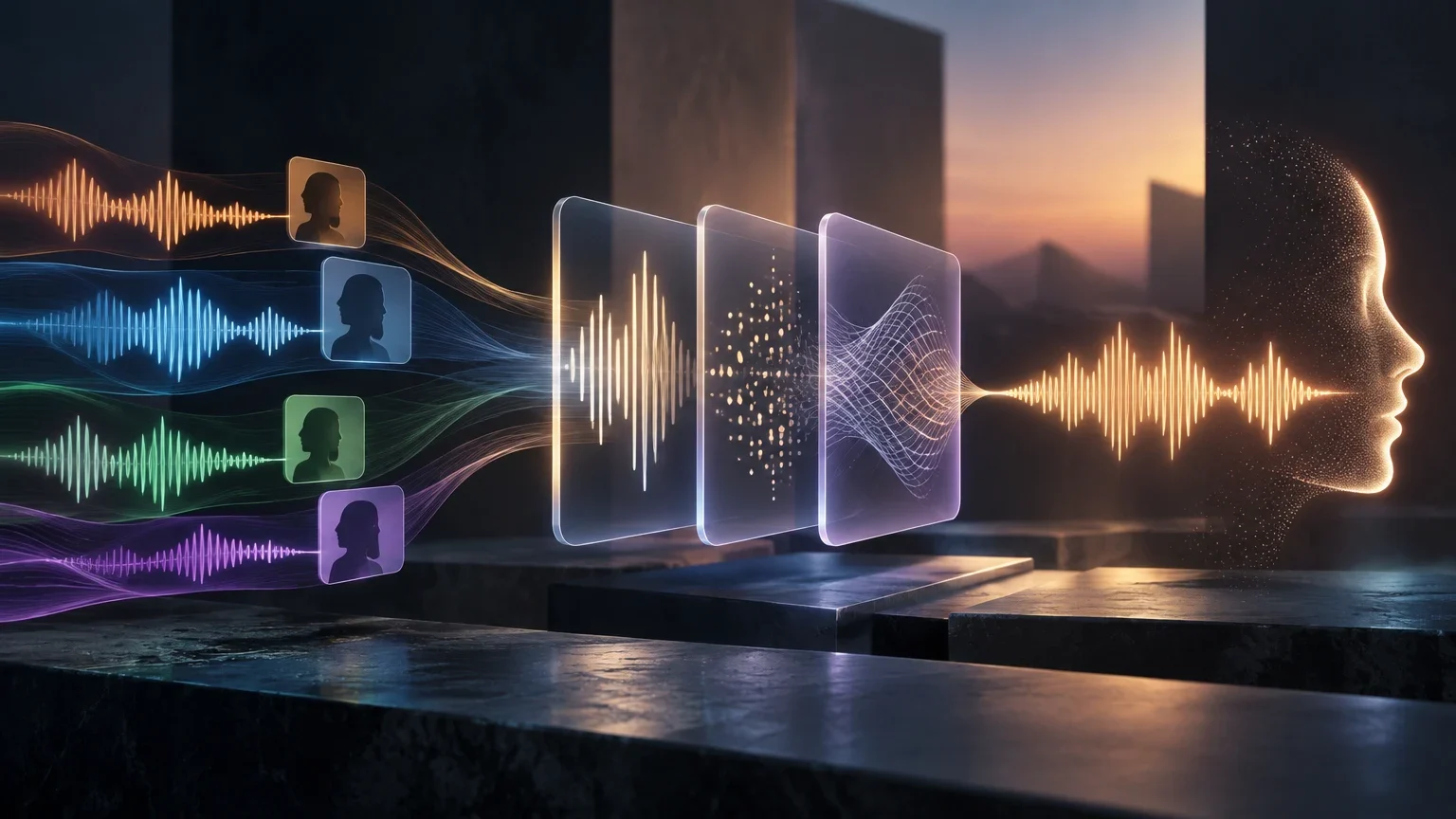
Mistral AI confirmed the launch of the Voxtral 3 family on October 20, 2026. This new generation of audio models includes four specific variants: Voxtral Small Transcribe 3, Voxtral Mini Transcribe 3, Voxtral Mini Transcribe Realtime 3, and Voxtral TTS 3. The official announcement was made through the company's communication channels and is supported by the technical documentation published on its developer portal.
Initial availability is in the form of a public preview via the Mistral API. This means the models are already accessible to developers, but they may be subject to changes in the interface or specifications during the pre-launch period. No downloadable weights have been published for local deployment at this time; access is exclusively provider-hosted.
Variants, modalities, and access
The Voxtral 3 family is divided into two main categories: speech-to-text (STT) transcription and text-to-speech (TTS) synthesis. Within transcription, there are three variants: Small, Mini, and Mini Realtime. The Small variant is oriented toward recorded audio files, while Mini offers a lighter alternative for the same purpose. The Mini Realtime variant is specifically designed for live audio streams via WebSocket, enabling incremental transcription.
The Voxtral TTS 3 model handles audio generation from text. Unlike previous versions, this iteration includes voice cloning capabilities through an optional audio reference. Access to all models is via the Mistral API, using specific versioned identifiers for each variant, allowing developers to pin the exact version they wish to use in their applications.
Voxtral 3 variants overview
Comparison of the four launched variants.
| Model | Modality | Primary use | Access |
|---|---|---|---|
| Voxtral Small Transcribe 3 | STT | File transcription | API (preview) |
| Voxtral Mini Transcribe 3 | STT | File transcription (lightweight) | API (preview) |
| Voxtral Mini Transcribe Realtime 3 | STT | Live transcription (WebSocket) | API (preview) |
| Voxtral TTS 3 | TTS | Speech synthesis and cloning | API (preview) |
What changes for the user
For development teams, the main novelty is the unification of the audio offering under a single family with improved capabilities. Transcription now natively includes speaker diarization and the ability to apply context bias to improve accuracy in specialized vocabulary, such as proper nouns or technical terminology.
In the case of speech synthesis, the introduction of voice cloning represents a significant change compared to previous versions, which were limited to preset voices. However, it is important to note that at launch, free-form style instructions are not available; customization is done through emotion tags and voice reference. Additionally, a LiveKit-based voice agent SDK has been launched, facilitating the integration of these capabilities into conversational applications.
Pricing, limits, and what remains to be verified
The Voxtral 3 pricing structure is based on audio or text consumption, not tokens. For transcription, costs range from $0.0035 to $0.008 per minute of audio, depending on the variant (Mini is the most economical, while Realtime has a higher cost due to the complexity of live processing). Speech synthesis costs $13 per million characters.
Regarding technical limits, official documentation indicates that transcription models support up to 50 languages, while the real-time model specifies 45 languages and dialects. There is a minor discrepancy in the documentation regarding context size: model cards indicate 32k tokens, while the audio limits guide mentions 65,536 shared tokens. Developers must validate the specific limit of their contracted endpoint before implementing applications that handle very long audio sessions.
Voxtral 3 public pricing
Rates per unit of consumption.
| Model | Billing unit | Price (USD) |
|---|---|---|
| Voxtral Mini Transcribe 3 | Minute of audio | 0.0035 |
| Voxtral Small Transcribe 3 | Minute of audio | 0.004 |
| Voxtral Mini Transcribe Realtime 3 | Minute of audio | 0.008 |
| Voxtral TTS 3 | Million characters | 13 |
Technical and privacy considerations
When working with real-time audio, it is crucial to properly manage reconnections and end-of-turn detection to avoid data loss or premature interruption of conversations. Speaker detection in Voxtral 3 is a diarization function, not biometric identification; therefore, it should not be used to definitively verify the identity of individuals.
From a privacy standpoint, processed audio may contain sensitive personal data. Developers must implement clear data retention policies, inform users about the processing of their voice, and ensure that voice cloning is used with the explicit consent of the person whose voice is being replicated. Cloning must not be used to impersonate identities or for fraudulent purposes.
Secure implementation checklist
Recommended steps before integrating Voxtral 3 into production.
- 01Validate the context limit of the contracted endpoint.
- 02Implement error handling for WebSocket reconnections.
- 03Configure retention policies for audio and transcripts.
- 04Obtain explicit consent for voice cloning.
- 05Test accuracy with real-world accents and noise.
Open questions
- The exact context size allowed by the API may vary between 32k and 65,536 tokens depending on the endpoint configuration, requiring technical verification before implementation.
- The availability of downloadable weights for local deployment is not confirmed; current access is exclusively via the Mistral-hosted API.
- Performance metrics (WER, CER) cited in the announcement come from Mistral's internal evaluations and have not been independently replicated by third parties to date.
Keep exploring
Sources consulted
Corrections and transparency
If you spot incorrect or outdated information, send us a correction with the page and source we should review.
Submit a correction