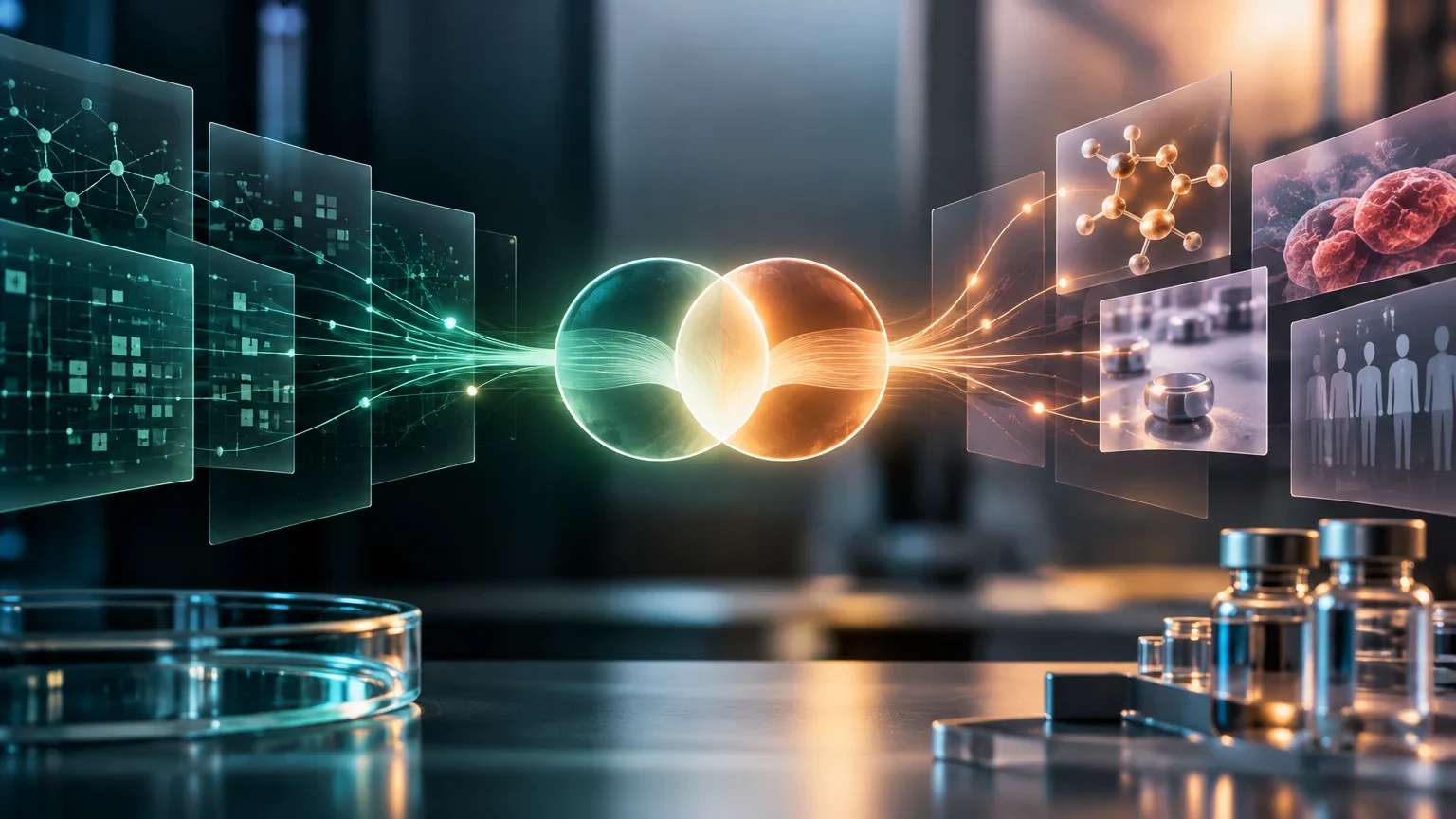
Acquisition announcement and strategic context
OpenAI Group PBC has confirmed the acquisition of Orchestra Bio Inc., a San Francisco-based startup specializing in software for the biopharmaceutical industry. The announcement was made public on October 20, 2026, marking a significant step in the company's strategy to expand its capabilities beyond data analysis into the operational management of complex scientific projects.
The deal does not reveal financial terms, but it is estimated that Orchestra Bio had raised approximately $20 million since its founding in 2022. Investors such as Andreessen Horowitz, 8VC, Insight Partners, and Definition Capital participated in its funding rounds. This move positions OpenAI in a sector where developing a new drug can take between 10 and 15 years to reach regulatory approval in the United States, a process that involves coordinating multiple departments and external partners.
Key deal data
| Element | Detail |
|---|---|
| Announcement date | October 20, 2026 |
| Acquired company | Orchestra Bio Inc. |
| Acquirer | OpenAI Group PBC |
| Orchestra's prior funding | ~$20 million USD |
| Key investors | Andreessen Horowitz, 8VC, Insight Partners |
| Purchase terms | Not disclosed |
What Orchestra Bio does: managing biomedical workflows
Orchestra Bio developed a platform designed to coordinate drug development programs using artificial intelligence agents that work alongside human scientists. Unlike tools that focus exclusively on molecule discovery, Orchestra's software focuses on the operational layer: managing the work surrounding the candidate molecule throughout its lifecycle.
The platform allows teams to delegate study tracking, deadline supervision, and incident identification to AI agents. These agents can monitor financing, resolve clinical trial scheduling problems, and detect bottlenecks caused by setbacks, such as manufacturing batch failures. The value proposition lies in keeping scientists within the process, providing them with information and alternatives to make final decisions, rather than replacing their judgment.
Integration with Rosalind: OpenAI's life sciences suite
Orchestra Bio's technology will be integrated into Rosalind, OpenAI's life sciences unit. Rosalind, launched in April 2026, includes GPT-Rosalind, a reasoning model designed specifically for biology and chemistry, and Rosalind Workbench, a tool that connects these models with scientific data and tools to analyze results and plan experiments.
The integration aims to add an operational dimension to Rosalind's existing capabilities. While GPT-Rosalind focuses on scientific reasoning and hypothesis generation, Orchestra's agents will manage the work necessary to turn those findings into treatments. This combination aims to bridge the gap between basic research and operational execution, offering pharmaceutical companies a comprehensive solution that spans from discovery to clinical trial coordination.
Integrated workflow in Rosalind
- 01Identification of scientific objectives using GPT-Rosalind.
- 02Planning of experiments and data analysis with Rosalind Workbench.
- 03Operational coordination of the development program via Orchestra Bio agents.
- 04Continuous monitoring of deadlines, finances, and risks in real time.
- 05Detection of deviations and generation of alternatives for human decision-making.
Capabilities of the new agents: coordination and risk detection
The AI agents derived from Orchestra Bio are designed to oversee drug development processes end-to-end. Their functions include tracking project financing, managing clinical trial scheduling, and proactively identifying potential bottlenecks. By comparing possible responses to a setback, these agents allow teams to anticipate problems that typically take weeks of manual management to detect.
It is crucial to note that the final authority to make decisions remains in the hands of scientists and program managers. The AI acts as an analytical copilot that provides data, context, and options, but does not execute autonomous actions requiring clinical or regulatory judgment. This hybrid approach seeks to maximize operational efficiency without compromising safety or human responsibility in drug development.
Industry impact and next steps
This acquisition positions OpenAI to compete directly with other AI players in the health sector, such as Anthropic, which acquired Coefficient Bio in April 2026. OpenAI already has alliances with major pharmaceutical companies like Novo Nordisk and Moderna, which use Rosalind to accelerate research and commercial execution. The incorporation of Orchestra Bio strengthens this offering by adding project management capabilities that are critical for the scalability of R&D programs.
However, significant uncertainties persist. No specific timeline has been revealed for the full integration of Orchestra's agents into OpenAI's products, nor how commercial access for new licenses will be structured. Additionally, the technical integration with laboratories' proprietary computer systems, which are often not connected to each other, represents a significant operational challenge. The success of this strategy will depend on OpenAI's ability to demonstrate that its agents can operate with the precision and safety required by the pharmaceutical industry.
Comparison of recent moves in AI and biotechnology
| Company | Acquisition/Initiative | Date | Focus |
|---|---|---|---|
| OpenAI | Orchestra Bio | Oct 2026 | Operational management of drug development |
| Anthropic | Coefficient Bio | Apr 2026 | AI for biotechnology (terms not disclosed) |
| OpenAI | Torch Health | Jan 2026 | Development of ChatGPT Health (medical records) |
Open questions
- It has not been specified when Orchestra Bio's agents will be available within OpenAI's products.
- The financial terms of the acquisition have not been disclosed by OpenAI.
- Specific mechanisms for supervising or validating decisions made with AI support are not detailed.
- There are no verifiable impact metrics demonstrating an actual reduction in development timelines to date.
- It has not been clarified how technical integration with pharmaceutical laboratories' proprietary computer systems will be resolved.
Keep exploring
Sources consulted
Corrections and transparency
If you spot incorrect or outdated information, send us a correction with the page and source we should review.
Submit a correction