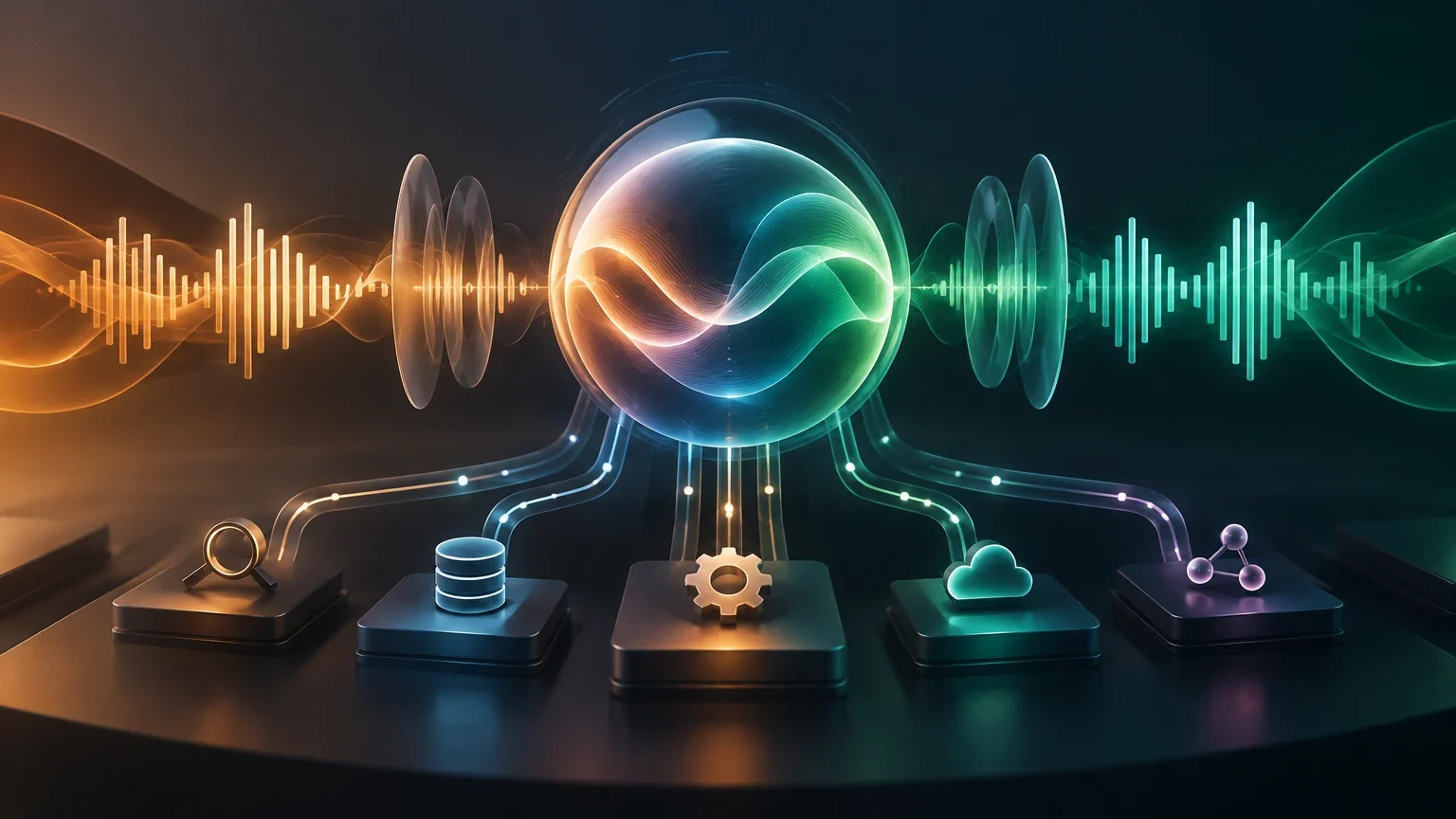
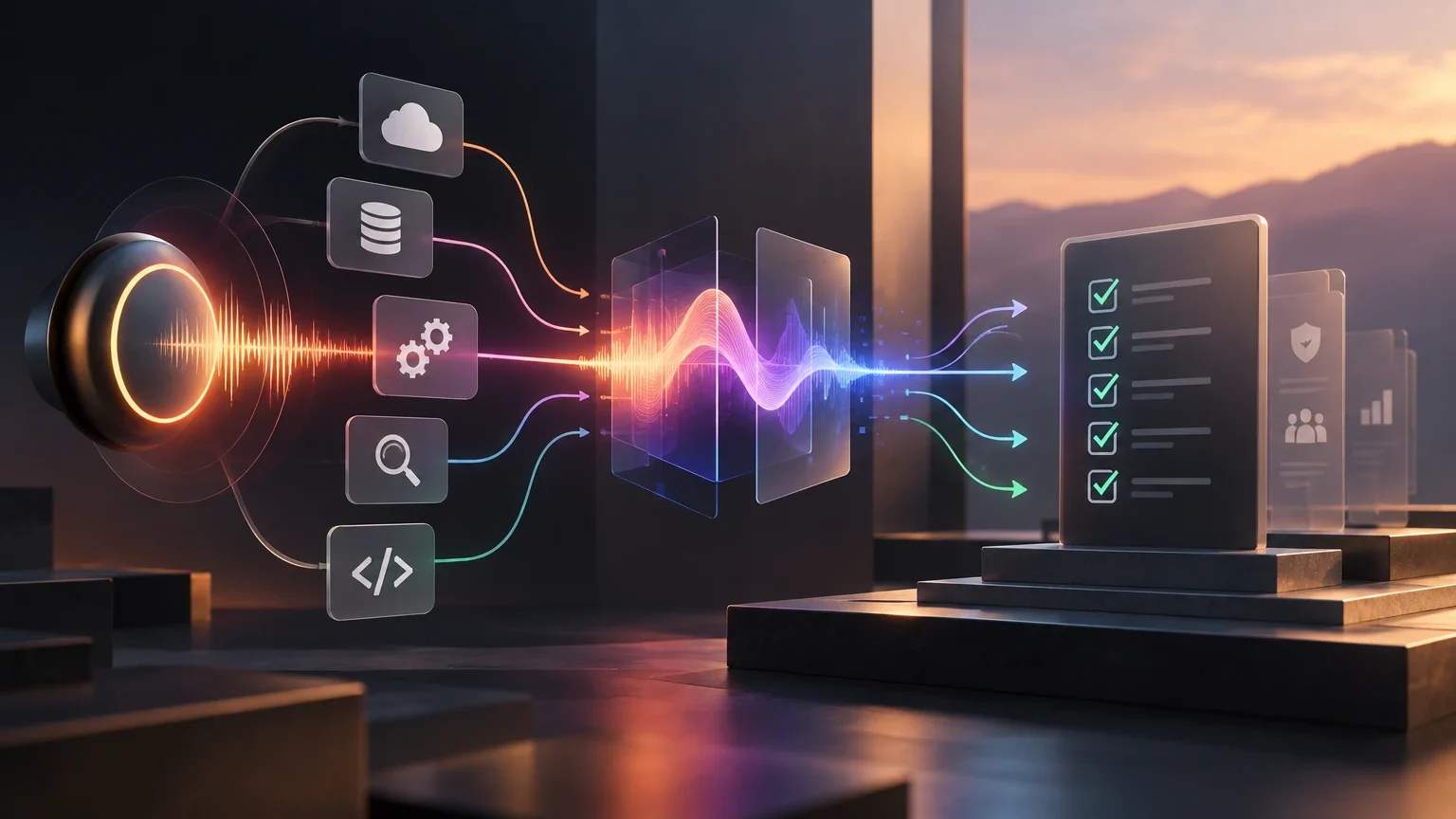
GPT-Live-1 brings an API voice layer that can receive and emit audio in a continuous conversation while reasoning or actions can be delegated to a backend. For production, the issue is not just achieving a smoother voice: it is retaining control over turns, cancellations, tools, external actions, and user confirmations.
Mistral OCR 4.1 changes the model targeted by certain aliases and adds block, structure, and confidence capabilities. Before updating a document workflow, teams should measure not only text legibility, but also the stability of tables, pages, coordinates, schemas, and human review.
The supplied documentation describes tool-use and reasoning mechanisms in the Live API that affect conversation state. However, it is not enough to confirm the announcement, general availability, or commercial terms attributed to Gemini 3.8 Live. This guide separates what is documented from the checks required before making a production change.
OpenAI’s new model combines reasoning, computer use and a very large context window. Its reported gains matter, but they do not replace local testing or controls over permissions, data and irreversible actions.
Google has marked Gemini 3.8 Flash as stable in its API. Its documentation positions it for long-horizon software engineering, autonomous agents, and complex enterprise workflows. The specification confirms a large context window, multimodal input, and tool integration, but it does not provide independent evidence that the model outperforms alternatives on real projects.
Anthropic introduced Claude Opus 5 on 24 July 2026 as a model aimed at programming, knowledge work and multi-step workflows. The company says it improves the performance-to-cost balance compared with Opus 4.8, but its comparisons call for caution: they combine in-house tests, different effort settings and, in some cases, fallback mechanisms involving earlier models.