Introduction to dsh-superagent as a research prototype
DeepSeek has made dsh-superagent public, a component that integrates into the DeepSeek Harness (dsh) ecosystem. Unlike standard versions of the harness, which function as sequential coding agents, dsh-superagent is designed as a research prototype to explore autonomy in solving complex problems.
The project is published under the MIT license, allowing the community to audit the code, modify orchestration logic, and adapt the agent to specific corporate environments. Its main objective is to overcome the limitations of traditional agents, which often stall in long tasks due to the sequential management of information and tool execution.
The classification of dsh-superagent as a research prototype underscores its experimental nature within the broader DeepSeek Harness ecosystem. This designation signals that the primary goal is to investigate the boundaries of autonomous problem-solving rather than to provide a stable, production-ready tool immediately. Consequently, the architectural decisions and orchestration logic are subject to rapid iteration as the development team gathers insights from complex, multi-step coding challenges. This approach allows for the exploration of novel delegation strategies that might not be feasible in more rigid, commercial agent frameworks, where backward compatibility and strict API stability are paramount constraints.
By making the codebase available under the MIT license, the project invites external scrutiny and collaborative development. This openness is particularly valuable for a prototype, as it enables the community to identify potential bottlenecks in the router-worker interaction and propose improvements to the dependency management logic. The ability to audit the code ensures that users can verify how the agent handles state transitions and error recovery, which are critical components in any autonomous system. This transparency fosters a deeper understanding of the underlying mechanisms, allowing developers to make informed decisions about whether the prototype's current capabilities align with their specific research or development objectives.
Router-worker architecture: delegation to parallel sessions
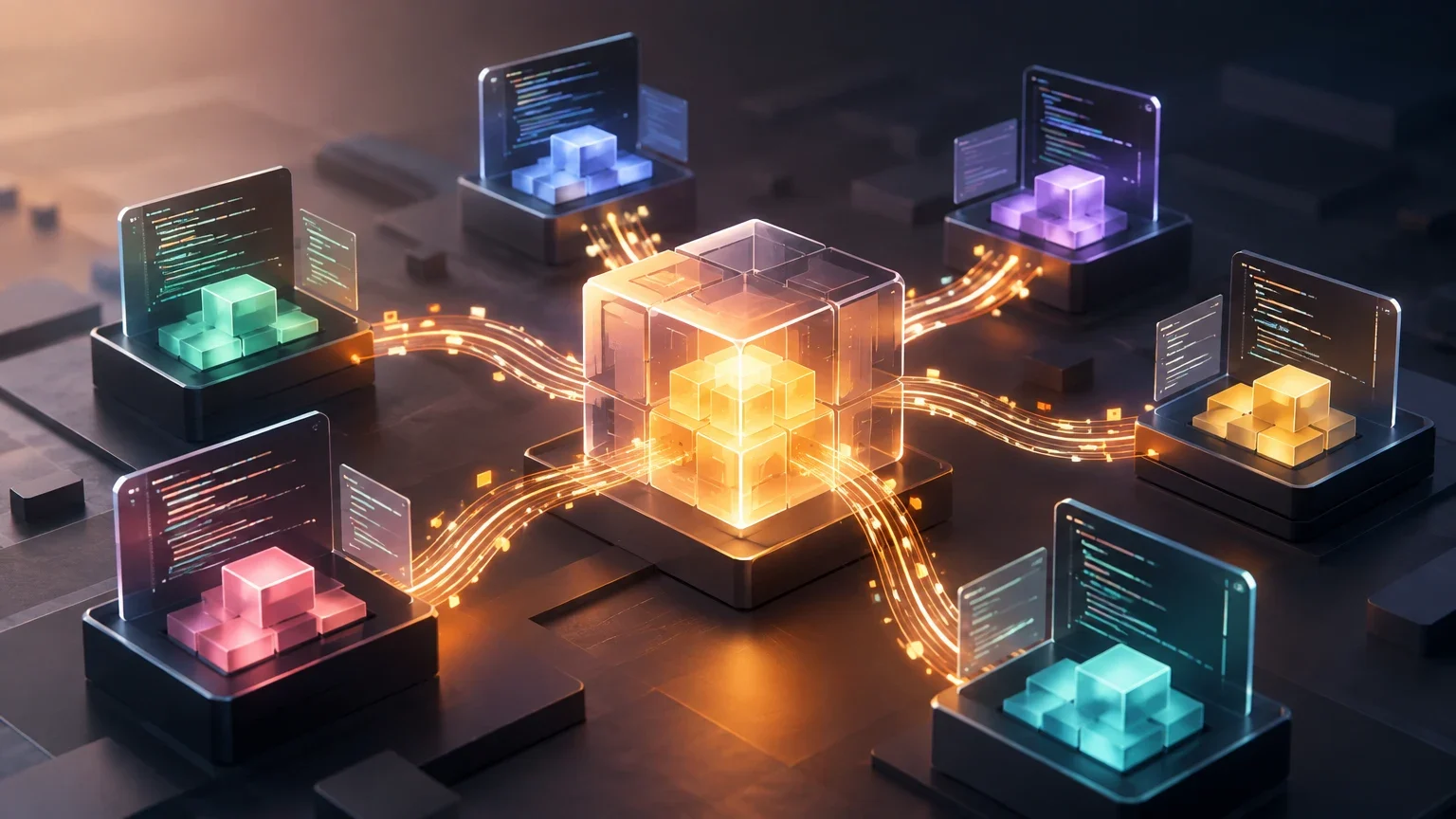
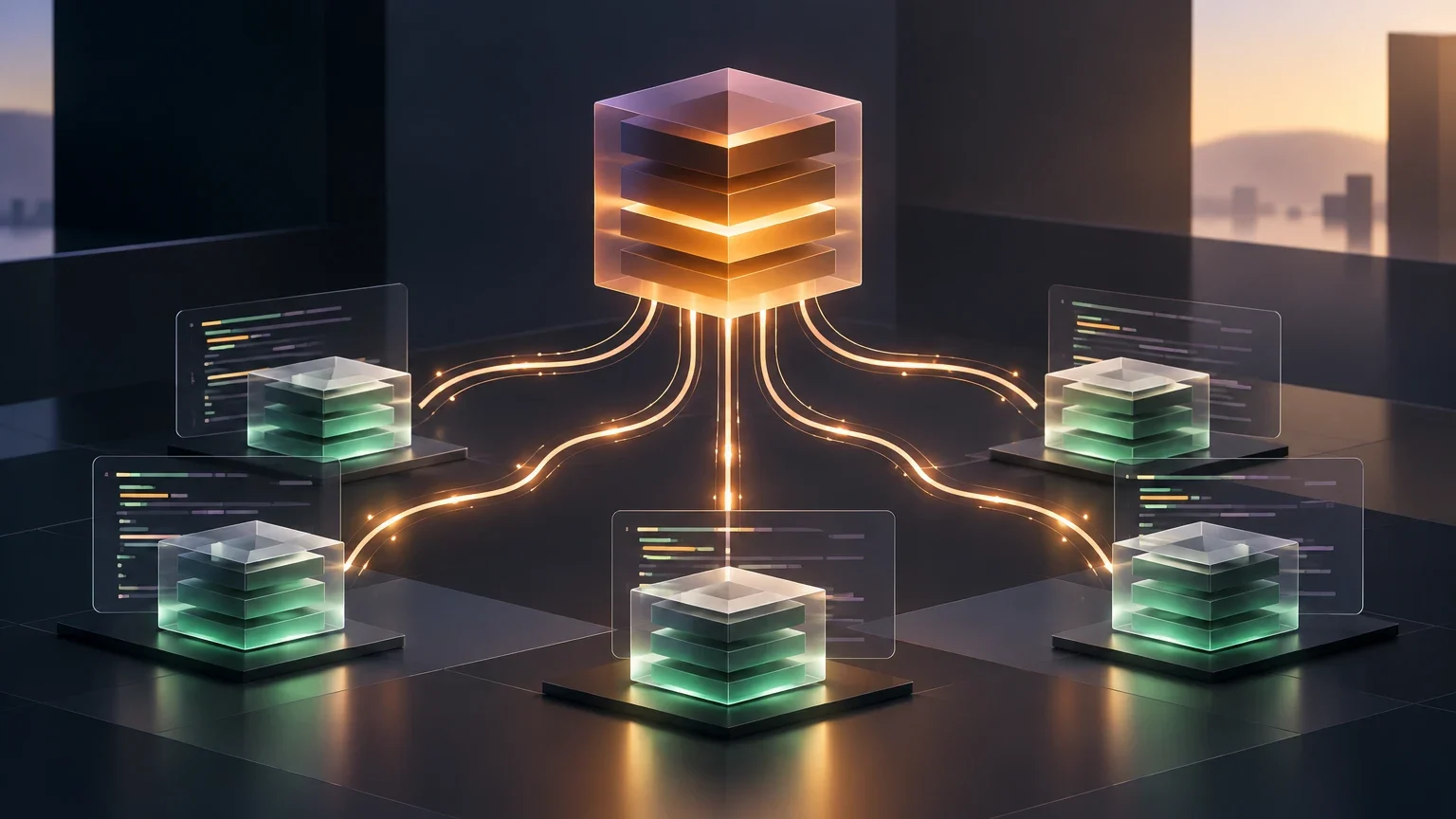
The central feature of dsh-superagent is its router-worker architecture. Instead of a single execution thread processing all sub-tasks, a routing component (router) analyzes the initial request and divides it into independent work units.
These units are delegated to multiple worker sessions that operate in parallel. Each worker can execute commands, read files, and generate code concurrently. This separation allows the agent to better leverage computational resources and reduce wait times between logical steps, which is critical in refactoring or massive testing tasks.
The router-worker architecture represents a fundamental shift from the monolithic execution models found in traditional coding agents. In a standard sequential agent, the entire task lifecycle is managed by a single thread, which must wait for each tool execution to complete before proceeding to the next step. This serial dependency creates inherent latency, especially when tasks involve time-consuming operations like compiling large codebases or running extensive test suites. By contrast, the router in dsh-superagent acts as a central coordinator that identifies independent sub-tasks and distributes them across multiple worker sessions. This parallelization allows the agent to utilize available computational resources more efficiently, effectively overlapping the execution of different components of the task.
The effectiveness of this architecture relies heavily on the router's ability to accurately decompose the initial request into truly independent units of work. If the router fails to identify dependencies between sub-tasks, it may assign conflicting operations to different workers, leading to race conditions or inconsistent file states. Therefore, the quality of the decomposition logic is a critical factor in the overall reliability of the system. The parallel workers operate concurrently, each capable of executing commands, reading files, and generating code without waiting for the others. This concurrent execution model is particularly beneficial for tasks that can be naturally partitioned, such as refactoring multiple independent modules or running parallel test cases, where the total execution time is determined by the slowest worker rather than the sum of all individual steps.
Router-worker execution flow
The execution process follows a sequence of three main phases that define the agent's parallelization.
- 01Request reception: The router analyzes the repository context and the requested task.
- 02Decomposition: Independent sub-tasks are identified and assigned to parallel workers.
- 03Concurrent execution: Workers perform their actions (read, write, bash) simultaneously.
- 04Integration: Results are consolidated and validated before returning the final response.
Analysis of performance metrics
The metrics provided by DeepSeek indicate a significant improvement in latency for long tasks. In their internal simulations, the 95th percentile (p95) completion time was reduced from 29.5 minutes to 15.7 minutes when activating the router-worker architecture.
This reduction suggests that parallelization is particularly effective in scenarios where the original task has sequential bottlenecks, such as waiting for compilation results or running extensive test suites. However, it is important to note that these figures come from simulations controlled by the development team.
The reported reduction in p95 completion time from 29.5 minutes to 15.7 minutes highlights the potential performance gains achievable through parallelization. This metric is particularly significant for long-running tasks where sequential bottlenecks dominate the execution timeline. In such scenarios, the ability to execute independent sub-tasks concurrently can lead to substantial time savings. However, it is crucial to interpret these figures with the understanding that they are derived from internal simulations controlled by the development team. These simulations may not fully capture the variability and unpredictability of real-world production environments, where factors such as network latency, resource contention, and unexpected system failures can impact performance.
The 46.8% estimated reduction in completion time suggests that the router-worker architecture is most effective in scenarios with high degrees of parallelism. For tasks that are inherently sequential or have strong dependencies between steps, the benefits of parallelization may be limited. In such cases, the overhead of coordinating multiple workers and managing shared state could potentially offset the time gains from concurrent execution. Therefore, the performance impact of dsh-superagent is likely to vary depending on the specific characteristics of the task and the underlying infrastructure. Teams considering the adoption of this architecture should conduct their own performance evaluations in their specific environments to determine the actual benefits and potential trade-offs.
Completion time comparison (p95)
Data based on simulations reported by DeepSeek for dsh-superagent.
| Configuration | p95 Time (minutes) | Estimated Reduction |
|---|---|---|
| Standard sequential agent | 29.5 | — |
| dsh-superagent (router-worker) | 15.7 | 46.8% |
Comparison with existing coding agents
Compared to popular coding agents like Claude Code or Codex CLI, dsh-superagent introduces a more complex orchestration level. While traditional agents usually operate in a sequential action-observation loop, dsh-superagent manages a dependency graph between workers.
This architectural complexity comes at a cost: coordination between workers requires careful management of shared state to avoid write conflicts in files. The MIT license facilitates developers implementing their own conflict resolution strategies or locking mechanisms if the default implementation does not fit their needs.
The comparison with existing coding agents like Claude Code or Codex CLI reveals the distinct architectural approach of dsh-superagent. While traditional agents typically operate in a sequential action-observation loop, where each step depends on the outcome of the previous one, dsh-superagent introduces a more complex orchestration layer. This layer manages a dependency graph between workers, allowing for more sophisticated task decomposition and parallel execution. This architectural complexity enables the agent to handle larger and more complex tasks more efficiently, but it also introduces additional challenges in terms of state management and error handling.
The need for careful management of shared state is a direct consequence of the parallel execution model. When multiple workers operate concurrently, they may attempt to read from or write to the same files or resources, leading to potential conflicts. To mitigate these risks, the agent must implement robust mechanisms for coordinating access to shared resources. The MIT license facilitates this by allowing developers to customize the conflict resolution strategies and locking mechanisms to suit their specific needs. This flexibility is particularly important for teams that have unique requirements for data integrity and consistency, as it enables them to tailor the agent's behavior to their specific operational context.
Implications of the MIT license and adoption
The choice of the MIT license for dsh-superagent removes legal barriers for its use in commercial products. This is relevant for companies seeking to integrate autonomous coding agents into their CI/CD pipelines without worrying about copyleft restrictions.
However, adoption depends on the maturity of technical documentation and API stability. Given that it is a prototype, teams implementing it must be prepared to update their integrations frequently and closely monitor performance in their own environments, as simulation metrics may vary significantly in real infrastructures.
The adoption of dsh-superagent in commercial environments is influenced by the legal clarity provided by the MIT license. This permissive license allows for the integration of the agent into proprietary products and CI/CD pipelines without the restrictions associated with copyleft licenses. This legal flexibility is a significant advantage for companies that wish to leverage the capabilities of autonomous coding agents while maintaining control over their intellectual property. However, the practical adoption of the agent also depends on the maturity of its technical documentation and the stability of its API. As a research prototype, dsh-superagent is subject to frequent changes, which may require teams to invest additional resources in updating their integrations and monitoring performance.
The potential for race conditions and other concurrency-related issues is a critical consideration for teams deploying dsh-superagent in production environments. The parallel execution model can introduce complexities that are not present in sequential agents, particularly when accessing shared resources such as the file system or process memory. To mitigate these risks, it is recommended to validate the router's behavior in low-criticality tasks before deploying the agent in high-stakes environments. This approach allows teams to identify and address potential issues in a controlled setting, reducing the risk of disruptions in production. Additionally, continuous monitoring of performance and resource usage is essential to ensure that the agent operates within expected parameters and to detect any anomalies that may indicate underlying problems.
Open questions
- Performance metrics (p95 of 15.7 minutes) come from DeepSeek's internal simulations and have not been independently replicated in diverse production environments.
- Detailed technical documentation on the specific implementation of the coordination mechanism between workers in dsh-superagent is not fully available in the primary sources consulted.
- It has not been confirmed whether the router-worker architecture introduces a proportional computational overhead that could offset time gains in low-complexity tasks.
Keep exploring
Sources consulted
Corrections and transparency
If you spot incorrect or outdated information, send us a correction with the page and source we should review.
Submit a correction