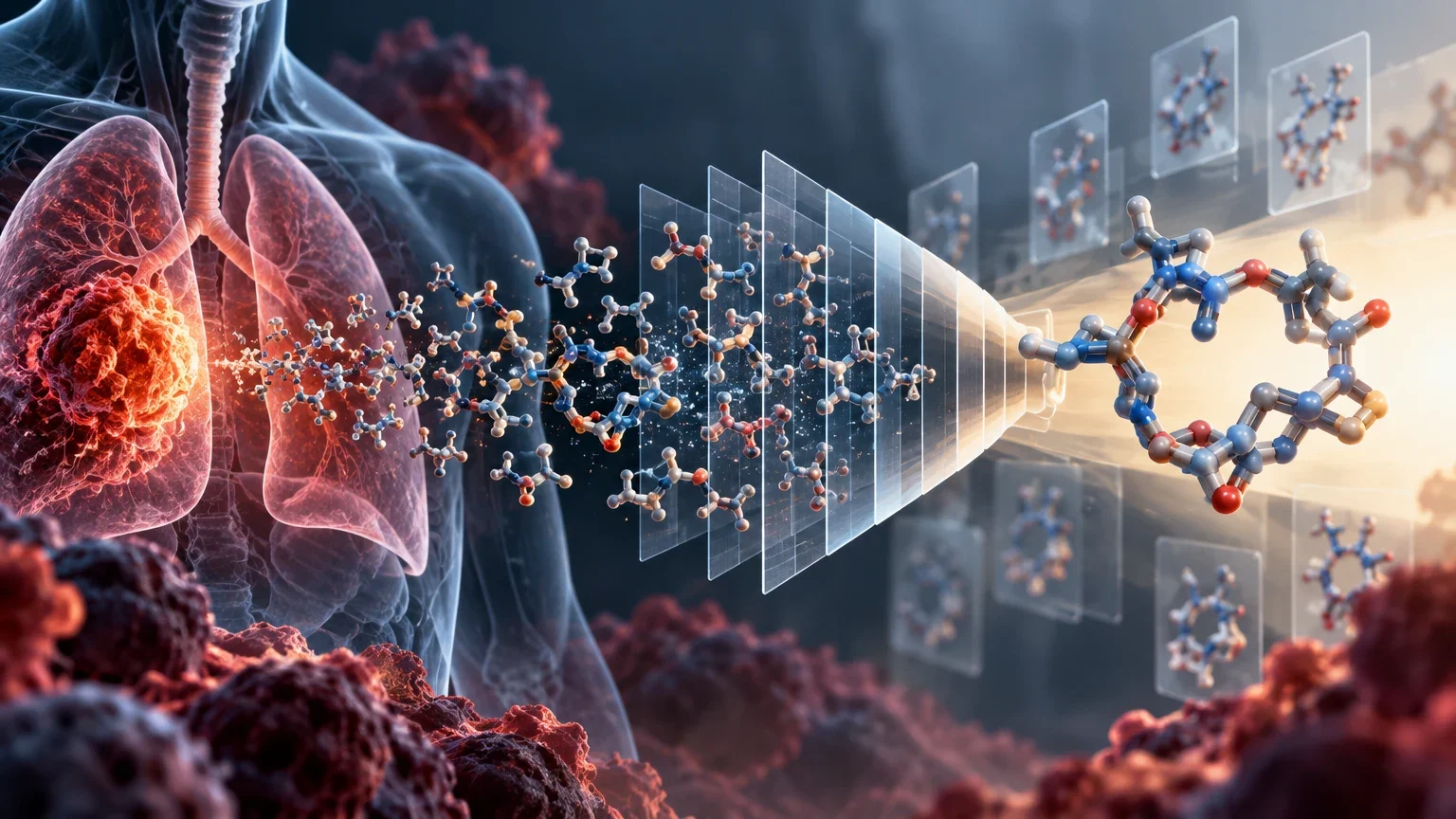
Announcement of Cheminformatics Skills in Google Antigravity
Google DeepMind has integrated a suite of Cheminformatics Skills into the Google Antigravity platform to accelerate drug discovery workflows. This update, published on November 3, 2026, enables AI agents to manage complex data curation tasks, database navigation, and scientific reasoning.
The system is designed to allow scientists to focus on hypotheses rather than data wrangling. The platform unifies different molecular representations, such as IUPAC names, Markush structures, and SDF files, reducing the risk of errors that could alter the identity of a compound.
The unification of molecular formats addresses a frequent technical barrier in research, where inconsistencies in nomenclature or file structure can introduce subtle errors in compound identification. By normalizing these representations, the system facilitates interoperability between different stages of discovery, allowing data to flow without loss of structural or semantic information.
Technical architecture and deterministic tools
The Antigravity architecture establishes a clear division of labor: the underlying language model handles workflow orchestration and navigation, while deterministic chemistry tools execute molecular calculations. This separation is crucial for maintaining precision in a field where altering a single atom completely changes the properties of the compound.
The system is based on RDKit, the open-source cheminformatics toolkit developed over two decades, and connects to curated resources from ChEMBL and PubChem. These integrations allow the agent to apply domain best practices directly within its workflow.
Relying on RDKit as the computational core ensures that molecular manipulation operations follow strict and reproducible chemical rules, avoiding the ambiguities inherent to pure generative models. This deterministic base acts as a precision anchor, ensuring that the structural transformations proposed by the agent are chemically valid before being evaluated by predictive models.
Technical components of the cheminformatics workflow
Summary of the tools and databases supporting the Cheminformatics Skills in Antigravity.
| Component | Primary function | Type |
|---|---|---|
| RDKit | Molecular calculations and structure manipulation | Deterministic toolkit |
| ChEMBL | Access to curated biochemical data | External database |
| PubChem | Compound search and physical properties | External database |
| Language model | Orchestration, reasoning, and navigation | AI agent |
Case study: Rigidification of tyrosine kinase inhibitors
The workflow was demonstrated using real-world treatments for non-small cell lung cancer. The objective was to apply the technique of molecular rigidification to improve drug potency, a process that reduces the entropic penalty by limiting the possible conformations of the molecule.
The agent analyzed crizotinib, a first-generation inhibitor with five rotatable bonds, and lorlatinib, a third-generation drug that has been cyclized to reduce its rotatable bonds to zero. This structural modification allows the molecule to maintain the active shape needed to bind its target, thereby increasing binding affinity.
The reduction of rotatable bonds in lorlatinib illustrates how conformational restriction can optimize interaction with the protein target. By minimizing molecular flexibility, the drug retains the geometry necessary for fitting into the active site, which translates into greater selectivity and therapeutic potency compared to previous generations of inhibitors.
Matched molecular pair analysis and predictive modeling
After retrieving thousands of compounds from the literature, the agent filtered out irrelevant molecules such as buffers and solvents. It then performed a matched molecular pair analysis (MMPA) to isolate the effects of small structural changes, such as cyclization, on cellular potency.
The system built multiple machine learning models to predict potency, using varying feature sets and different architectures. To validate these models, chronological splits and scaffold splits were employed to better estimate generalization to out-of-distribution data.
The use of scaffold splits in model validation is fundamental for evaluating the system's generalization capacity against chemical structures not seen during training. This approach allows for the detection of overfitting and ensures that potency predictions remain robust even when the model faces new molecular skeletons, a critical aspect for proposing new compounds.
Molecular data analysis workflow
Steps executed by the agent to move from literature to design proposal.
- 01Extraction of molecules from articles and vendor catalogs.
- 02Filtering of irrelevant compounds and documentation of sources.
- 03Execution of MMPA to compare pairs of cyclized and non-cyclized molecules.
- 04Training and validation of potency models using scaffold splits.
- 05Proposal of new macrocycles and synthesis routes based on the results.
Experimental limits and hypothesis validation
Although the workflow reduced the time for one iteration from several days to one hour, Google DeepMind emphasizes that computational designs are testable hypotheses, not finished drugs. Predictive precision remains limited by sparse data, inter-lab assay noise, and narrow dynamic ranges of the assays.
Each design proposed by the agent must be synthesized and experimentally validated before attributing pharmacological value to it. The system can prepare these compounds for further analysis with AlphaFold or molecular dynamics simulations, but final confirmation lies in biological validation in the laboratory.
Integration with tools like AlphaFold or molecular dynamics simulations expands the scope of computational analysis, allowing exploration of binding dynamics and structural stability of proposed candidates. However, these in silico models complement, but do not replace, the need to confirm biological activity through in vitro and in vivo assays, which remain the definitive standard for pharmacological validation.
Keep exploring
Corrections and transparency
If you spot incorrect or outdated information, send us a correction with the page and source we should review.
Submit a correction