The challenge of predicting genetic variant impact
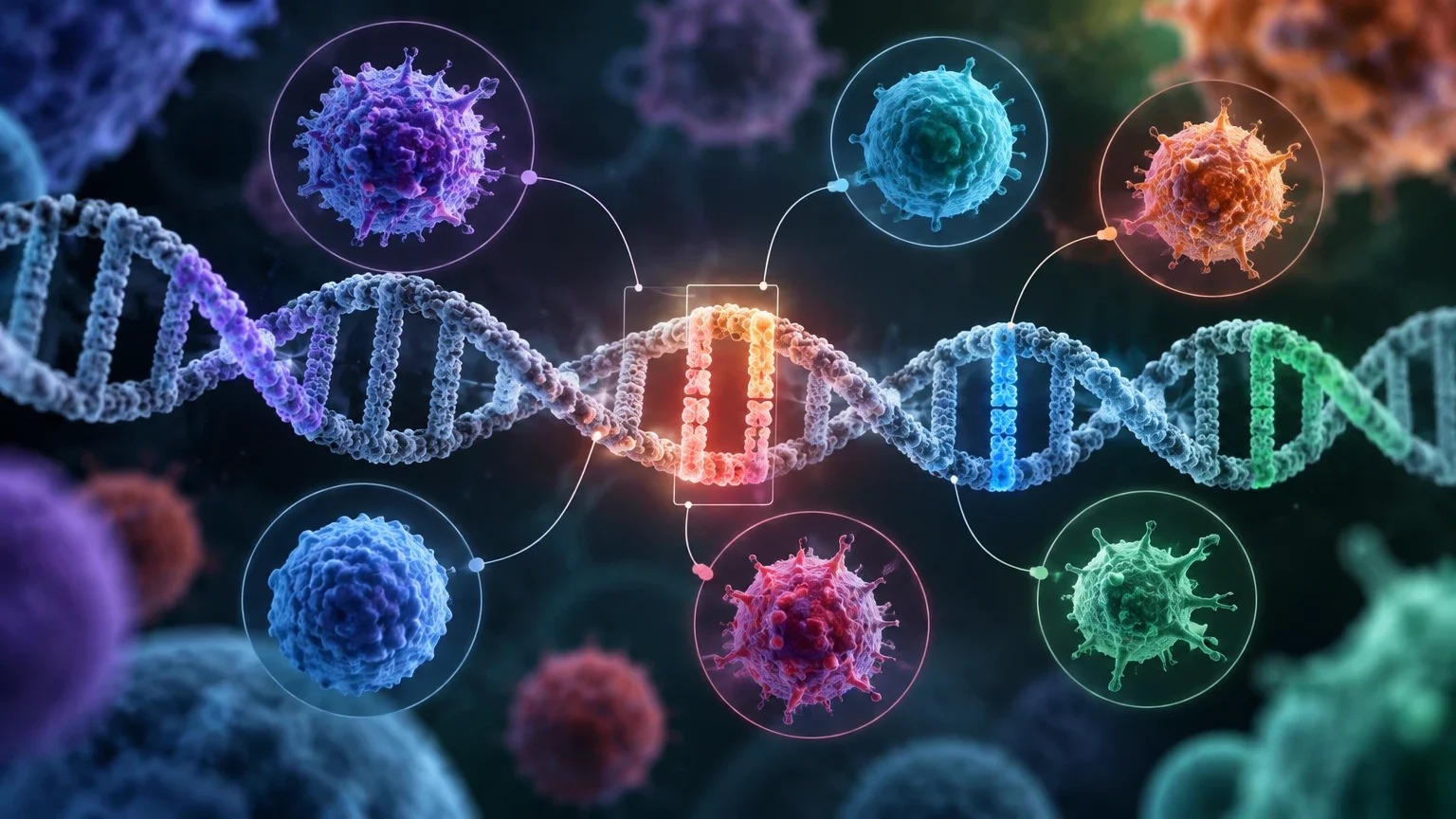
Every cell in the human body contains the same DNA, but they do not activate the same genes or respond in the same way to a genetic alteration. A variant can have different effects depending on the cell type and state, meaning that averages across whole tissues can obscure signals relevant to a disease. This is the primary challenge addressed by Google DeepMind's new tool.
Interpreting how genetic variations impact gene expression and their molecular-level effects has been a difficult experimental process. AlphaGenome 2 aims to accelerate progress toward this goal by predicting how variants disrupt these biological processes, revealing how the protein-building blueprints and the control panel regulating gene activity are connected.
A conditional architecture centered on cellular context
Unlike the previous version, which received a one-million-letter DNA sequence and produced parallel predictions for numerous tissues, AlphaGenome 2 adopts a conditional approach. It analyzes a specific biological condition, such as a tissue, cell type, or state, alongside the genetic sequence. This condition enters at different stages of the model's architecture, allowing it to estimate how the same DNA fragment is interpreted in different cellular contexts.
The model was trained on more than 107 million individual cell profiles from 68 tissues, combining data from human and mouse samples. In addition to the gene expression, histone modification, and chromatin accessibility predictions offered by the previous version, AlphaGenome 2 incorporates DNA methylation estimates. This breadth allows it to infer missing experimental measurements, such as predicting chromatin accessibility from single-cell gene activity data.
Key differences between AlphaGenome 1 and AlphaGenome 2
| Feature | AlphaGenome 1 | AlphaGenome 2 |
|---|---|---|
| Prediction approach | Fixed parallel outputs for bulk tissues | Conditional model for a specific cell type or state |
| Training data | Long DNA sequences | More than 107 million individual cell profiles |
| Additional modalities | Gene expression, histones, chromatin | Includes DNA methylation and multimodal imputation |
| Generalization | Requires fine-tuning for new contexts | Adapts to new scRNA-seq data without retraining |
Quantitative improvements in variant identification
Google DeepMind reported that, in the TenK10K dataset, a map of 28 primary immune cell types, AlphaGenome 2 reliably identified 30% of causal variants, compared to 16% for the previous model fine-tuned with single-cell data and other specialized tools. In the identification of directional gene effects, the comparison was 43% versus 23%.
These results, provided by the company, suggest that the model can help prioritize candidate variants that other analyses might overlook. The evaluation also examined whether the model could track continuous changes in gene expression in maturing cells, such as blood stem cells advancing toward red blood cell or immune cell lineages, showing a better ability to explain differences between cell types within the same tissue in regions not seen during training.
Applications in disease research and drug design
The tool allows connecting genetic variants to target genes in primary human cells, such as brain astrocytes, by mapping enhancers and regulatory switches. In genome-wide association studies (GWAS), which often point to regions linked to a trait without identifying the causal variant, AlphaGenome 2's precomputed scores can help prioritize possibilities in traits ranging from height to type 2 diabetes.
For drug development, identifying the involved cell and protein is crucial when defining a therapeutic target. The model computationally reproduced a previous finding about a variant in a distant regulatory element that increases the activity of the ETS2 gene in intestinal macrophages, cells linked to inflammatory bowel disease. This case illustrates how a genetic signal can depend on the cell where it acts, a key factor for precision medicine.
Limitations and scope of the tool
Both AlphaGenome and AlphaGenome 2 are intended solely for research and have not been validated or approved for clinical or diagnostic purposes. The company warns that the tool is for research only and that more detailed predictions involve a higher computational cost. For this reason, DeepMind does not expect to immediately replace the previous version, as the new model was not practical for producing the atlas covering all possible single-letter changes in the human genome.
The model's performance is conditioned by the data it was trained on. Although it can generalize to new cellular states by uploading single-cell RNA data, it does not replace laboratory verification. Multimodal imputation can guide which experiments to perform next, but it does not by itself demonstrate a clinical mechanism. The company anticipates working on tools for its agentic development platform Google Antigravity, but does not present the model as a diagnostic system.
Keep exploring
Sources consulted
Corrections and transparency
If you spot incorrect or outdated information, send us a correction with the page and source we should review.
Submit a correction