OpenAI attributes ten advances in mathematics and theoretical computer science to an internal model. The available information confirms the announcement, but does not make it possible to assess the proofs or establish which results have been independently reviewed.
Available information attributes plans to OpenAI to watermark some ChatGPT and Codex text in the EU, but it does not confirm which models, dates, outputs or detection conditions are involved.
Microsoft Research presents a system that models how specific students might respond to questions and guidance from an AI tutor. While results are promising across three domains, the simulation does not prove that a tutor improves real learning or replace testing with students.
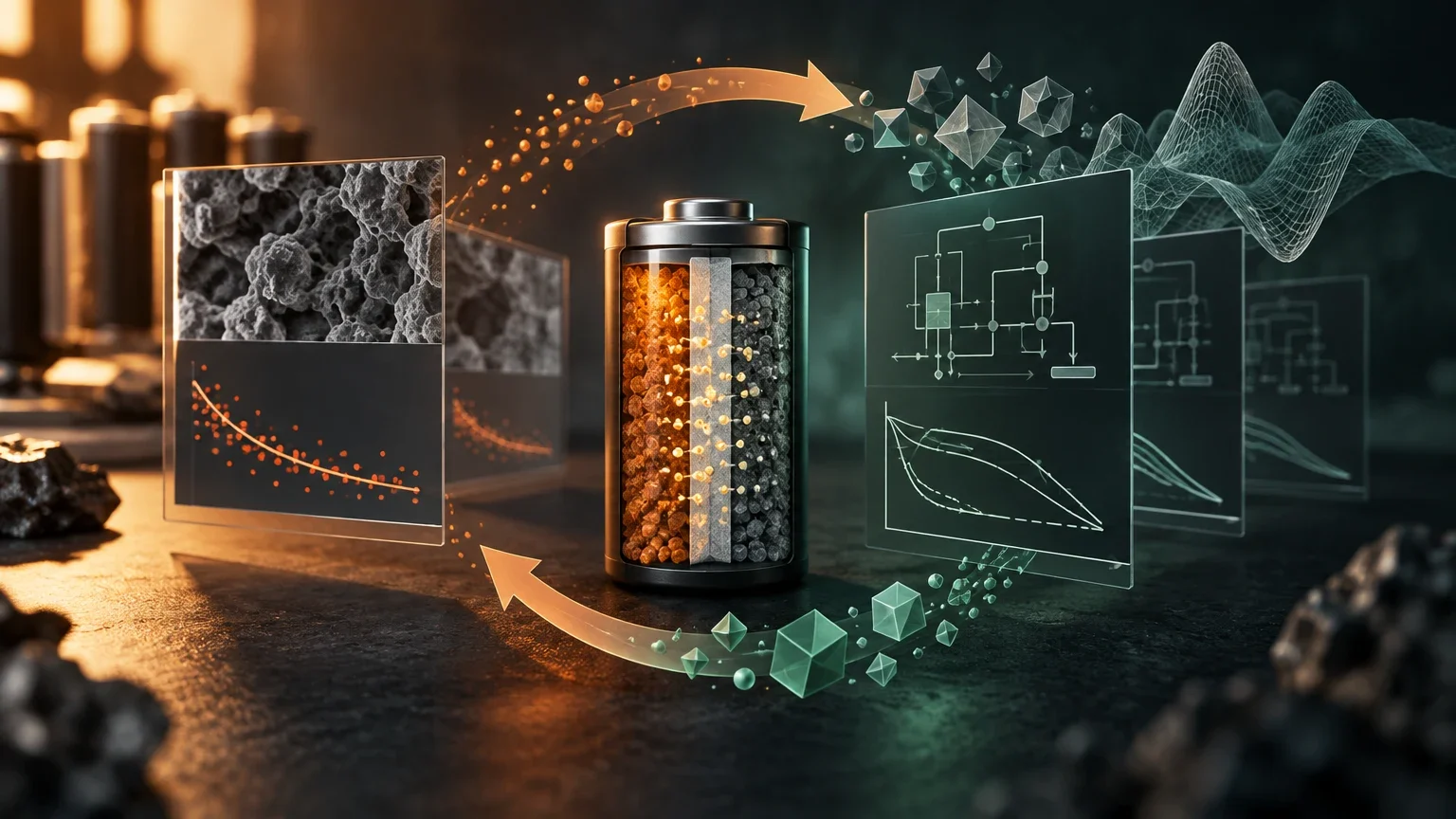
A preprint describes a system that changes mechanisms and equations in battery models when their predictions differ from experiments. Its abstract reports results on two tasks, but does not provide enough evidence to assess reproducibility or validity beyond those cases.
Researchers present a method to project the outputs of biomolecular diffusion models, correcting physical defects such as chain clashes or distorted bonds without the need to retrain the model.
A new preprint introduces Long-Transduction, a test designed to isolate how errors in AI models grow as context lengthens, input data formats change, or sub-task complexity increases. The authors report significant performance drops in seven open-weight models, highlighting a critical vulnerability for long-duration agentic workflows.
A recent preprint proposes a system that dynamically adjusts the distribution of workers between prefill and decode phases to prevent SLO violations without requiring additional GPUs.
A preprint introduces a technique that retrieves continuations from the current trajectory and combines them with drafts generated by another model. The abstract reports improvements in acceptance and throughput but does not provide detailed figures to assess its practical scope.
A technical report introduces a time-series model designed for demand-specific challenges such as frequent zeros and stockouts. It combines a specialised corpus with an adapter attached to a general-purpose model.
A preprint tests whether disagreement among a small model’s answers can predict when a query should be routed to a larger model. Results on GSM8K show an improvement, but the study also flags methodological pitfalls and operational costs.
H Company introduces two agent models capable of switching between graphical interfaces, code execution, and MCP or API tools. Weights and results are published, though tests do not prove general autonomy or uniform performance across all environments.
Google DeepMind and GovTech Singapore have announced a tool that uses on-device Gemma models to analyze potential conversational scams. The available information does not specify the model variant, test results or the full scope of its privacy protections.