Reorganization of the robotics team
OpenAI has dissolved its standalone robotics team and reassigned its researchers to other areas of the company. The company confirmed the reorganization when asked, describing the change as a strategy to accelerate progress in robotics rather than an abandonment of the research line.
Robotics researchers have been moved to the main research team, which reports to Chief Research Officer Mark Chen. Meanwhile, the applied robotics and hardware teams have been reassigned to the Applied organization, which reports to OpenAI President Greg Brockman. This structure seeks to integrate robotics into the development of broader artificial intelligence models.
General-purpose model strategy
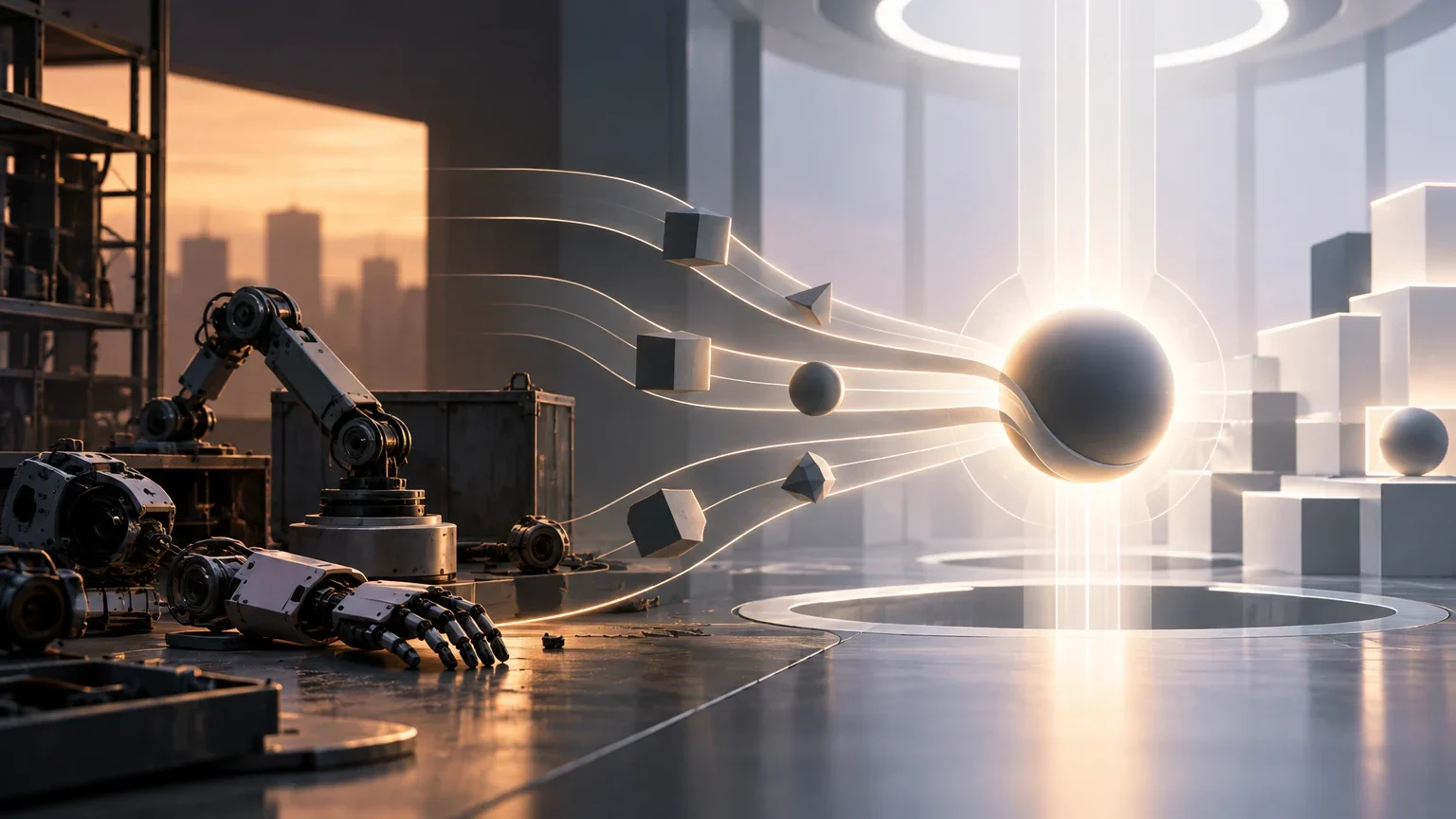
The reorganization reflects a growing bet in the AI industry: that general-purpose models, designed for language, code, and vision, can be applied directly to embodied AI, where models control physical devices such as robots. This vision reduces the need for specialized teams building specific models to serve as the digital "brains" of robots.
OpenAI indicated that, at the start of the year, its researchers assumed the best way to advance in robotics was to build on its work in models like Sora, a video generator that requires an implicit understanding of the physical world. However, the company stated that its general-purpose frontier models, including GPT-6 Astra, have demonstrated that they can be applied directly to robotic tasks, which motivated the dissolution of the standalone team.
Evidence and limitations of general models
Recent experiments have evaluated the ability of general-purpose models to perform robotic tasks without specialized training on robotic data. In an Nvidia study, an agent based on GPT-6 Astra achieved a 74.8% success rate on a simulated manipulation benchmark, surpassing the 51.0% reported by the best specialized robotic models on that same leaderboard.
It is crucial to distinguish between simulation and physical reality. The 74.8% result corresponds to a digital environment where the model commands a simulated robot. Experts point out that, although general-purpose models show advances in spatial reasoning, physical robots still require deployment experience in real places, such as factories, to adapt to specific tasks. Additionally, large language models are slow and require cloud connectivity, which limits their use in robots that need to operate autonomously without a constant internet connection.
Comparison of results in simulated manipulation
Data extracted from an Nvidia study cited in the report. Simulation does not guarantee performance on physical robots.
| Model | Type | Success rate (simulation) |
|---|---|---|
| GPT-6 Astra | General-purpose | 74.8% |
| Best specialized models | Robotic | 51.0% |
Historical context and economic pressure
OpenAI had a robotics team in its early days, but scaled it down in 2020, citing a lack of robot data and a more efficient path toward artificial general intelligence (AGI) through language models. The company rebuilt a standalone team in 2024, establishing a partnership with Figure to develop models for humanoid robots, a collaboration that ended in February 2025 when Figure decided to develop its own AI.
The reorganization occurs at a time of pressure to reduce costs and demonstrate a more focused approach on core products. Sam Altman has urged the company to abandon "side quests" and reallocate computing resources toward more profitable efforts. OpenAI faces significant operating losses and is preparing for a possible initial public offering (IPO) in early 2027, which influences the decision to integrate robotics into general research.
Implications for the industry and the future
OpenAI's decision challenges the premises of many robotics startups that have raised billions on the idea that robots need specialized brains. However, experts like Russ Tedrake from MIT argue that robotics companies maintain an advantage: their robots are already gaining work experience in real places, generating data that helps them adapt to specific environments. Better foundational models make that local data more valuable.
OpenAI has stated that it is developing its own humanoid robot, with CEO Sam Altman targeting a first public demonstration in 2027. This goal is a statement of intent and not a confirmed launch. The scientific community continues to debate whether general-purpose models will dominate robotics in the long run or whether smaller, specialized models that run on the robot's onboard computer will be necessary.
Reorganization flow
Key steps in the integration of the robotics team:
- 01Dissolution of the standalone robotics team.
- 02Transfer of robotics researchers to the central research team (reports to Mark Chen).
- 03Reassignment of applied robotics and hardware teams to the Applied organization (reports to Greg Brockman).
- 04Integration of robotics as an application of general-purpose models like GPT-6 Astra.
Keep exploring
Corrections and transparency
If you spot incorrect or outdated information, send us a correction with the page and source we should review.
Submit a correction