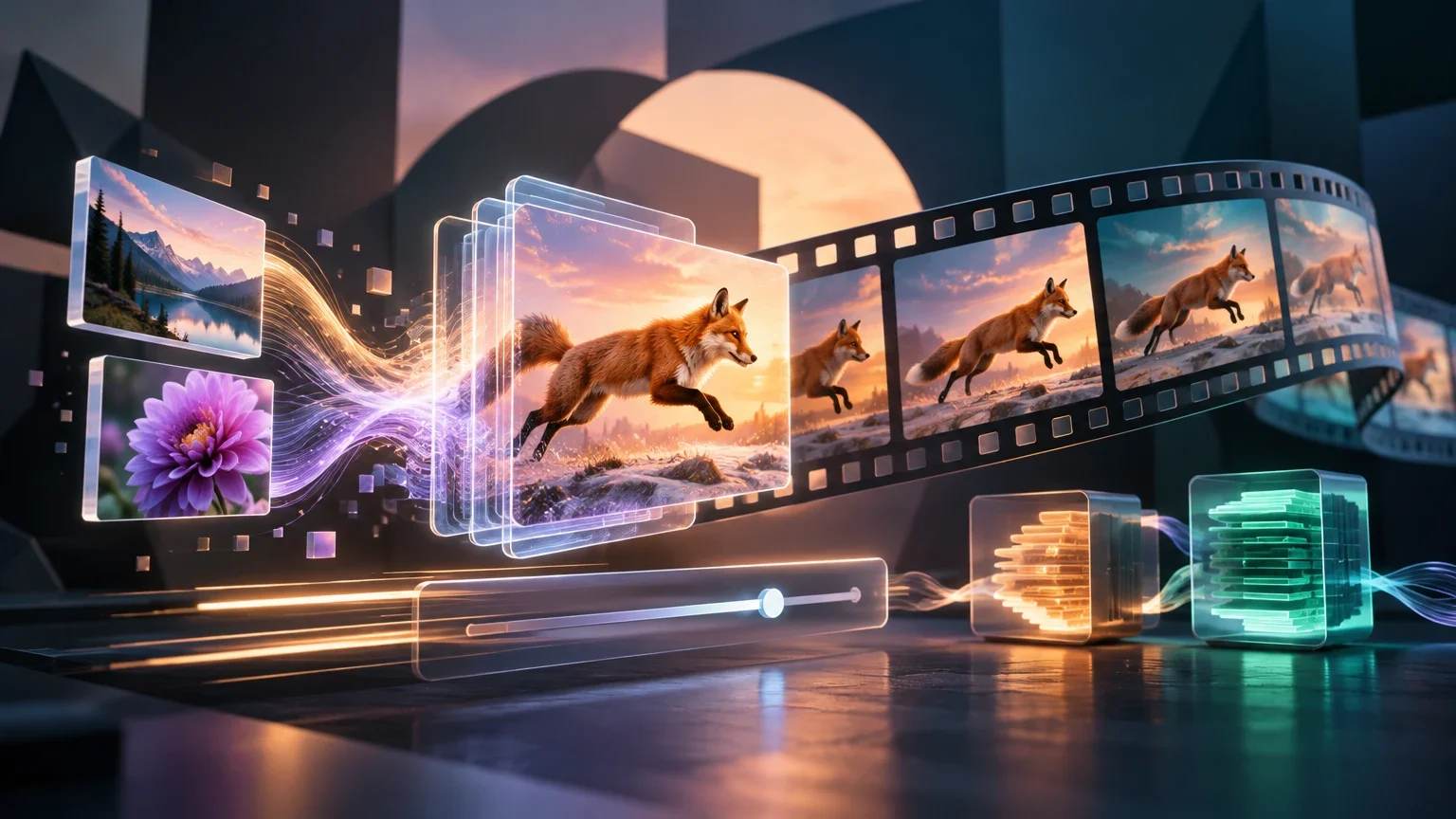
Images 2.6 launch
OpenAI has introduced Images 2.6, a new image generation model that adds the ability to create animated GIFs directly within ChatGPT. This feature allows users to generate animations from a written instruction or an uploaded photograph, eliminating the need for external editing tools.
The model is deployed across ChatGPT and Codex for web, desktop, and mobile devices. The company states that this update accelerates image generation, although it has not provided independent comparative figures regarding response times.
The update places image creation and short animation within the same conversational workflow: a written instruction or uploaded photograph can serve as the starting point, and the resulting GIF can be handled in ChatGPT without a separate editing application. The stated rollout also spans ChatGPT and Codex across web, desktop, and mobile, while OpenAI’s claim of faster generation remains unaccompanied by independent response-time comparisons.
An animated GIF is a sequence of images played in succession, so the feature’s emphasis on short sequences distinguishes its workflow from traditional video generation without establishing that it replaces video tools. The model’s availability across several interfaces describes where users can access it; it does not, by itself, establish identical behavior, speed, or limits on every device.
Creating and editing animated GIFs
The main novelty is the one-step generation of animated GIFs. Users can write a prompt such as "Create a GIF of..." or upload a reference image to obtain an animation. The result allows adjusting the playback speed between 0.25x and 2x and editing individual frames before sharing or downloading the file.
This functionality differs from traditional video generation by offering a lighter workflow focused on short sequences. The tool maintains standard protection barriers to prevent the creation of unauthorized content, such as the representation of famous people without consent.
The controls make the generated result adjustable rather than requiring users to accept the first animation unchanged. Playback speed can be set anywhere in the stated range of 0.25x to 2x, and individual frames can be edited before the file is shared or downloaded. Those options describe the available workflow; they do not establish that every prompt or frame can be edited in any desired way.
The protection barriers are intended to prevent content that the tool does not allow, including depictions of famous people without consent. That restriction concerns what the system is meant to permit, not a guarantee that every prohibited request will be blocked or that every generated result will comply with the rules. The example of animating a pet photo illustrates the sequence of actions, but does not establish a required prompt format or a guaranteed visual result.
New API models for developers
For developers, OpenAI has launched two new API models: GPT-Image-2.6 Flare and GPT-Image-2.6 Sunburst. Flare is oriented toward speed, allowing image generation in low quality in approximately six seconds, ideal for posters or product images. Sunburst prioritizes quality and advanced editing, offering greater precision in visual detail.
This separation allows professionals to choose between performance and quality according to their specific needs. Additionally, an SVG export system and image tagging in the API have been implemented to facilitate integration in design and development projects.
The two API model names describe different priorities in the stated offering: Flare emphasizes faster generation, while Sunburst emphasizes image quality and advanced editing. OpenAI’s estimate for Flare is approximately six seconds for low-quality image generation; that figure is not a comparison of the two models under identical conditions, and it does not indicate how long higher-quality generation takes. The distinction gives developers a choice of stated emphasis, not a guarantee that either model will meet a particular project’s needs.
The API’s SVG export and image-tagging features are described as integration aids for design and development projects. Their presence does not, on its own, establish that every generated image can be exported as SVG, that exported files will suit every downstream workflow, or that tags will always be accurate. The comparison table’s recommended uses summarize the models’ stated positioning rather than independently measured performance.
API model comparison
| Model | Primary focus | Recommended use case |
|---|---|---|
| GPT-Image-2.6 Flare | Speed | Rapid generation of posters, product images, and prototypes |
| GPT-Image-2.6 Sunburst | Quality | Advanced editing, high resolution, and precise details |
Usage volume and market context
OpenAI reports that users currently generate more than 4 billion images per week in ChatGPT and its API, compared to 3 billion recorded in September. This figure covers all image usage, not just GIFs, so it does not allow calculating the specific proportion of generated animations.
The launch comes months after the closure of Sora, OpenAI's AI video application. Although it is not presented as a direct substitute, the inclusion of GIFs adds an integrated form of animation to the chat experience, expanding creative options for end users.
The weekly total reported by OpenAI covers image generation across ChatGPT and its API, while the earlier September figure is presented as a comparison point. Because the total combines image use rather than isolating animated GIFs, it cannot show how many GIFs users create or what share of all generated images they represent. The figures therefore describe the company’s reported overall volume, not an independently verified count of animations.
Sora’s closure provides context for the timing of the GIF feature, but the launch is not described as a direct replacement for that video application. GIF creation adds a form of short animation within chat, while the distinction between that workflow and video generation remains important: the addition does not establish equivalent duration, capabilities, or output.
Availability and limitations
The GIF creation feature is available to all ChatGPT users, including the free plan, although quality and usage limits may vary by plan. Basic image generation is accessible at all levels, while advanced modalities with prior reasoning are reserved for Plus, Pro, and Business plans.
Sources do not detail specific resolution or duration limits for generated GIFs, nor how the tool behaves with complex instructions. The speed improvement is presented as a company claim, without independent measurements to support it.
Access to GIF creation is described as available to users on both free and paid ChatGPT plans, while quality and usage limits may differ by plan. The description does not specify whether a particular plan has a distinct GIF quota, nor does it provide numerical limits for resolution or duration. Basic image generation is described as available across plans; advanced image modalities involving prior reasoning are reserved for Plus, Pro, and Business.
OpenAI’s speed claim and reported usage totals should be read within their stated scope. The reported weekly image volume includes images generally, not GIFs alone, and no independent measurements establish the claimed speed improvement or an exact weekly GIF count. The feature’s behavior with complex instructions, along with specific output limits, is also not described, so the available account does not establish performance in those conditions.
Keep exploring
Sources consulted
Corrections and transparency
If you spot incorrect or outdated information, send us a correction with the page and source we should review.
Submit a correction