Primary use stated or inferred cautiously from official documentation.
L
LIQUID AI / LiquidAI/Liquid-Codec
LiquidCodec
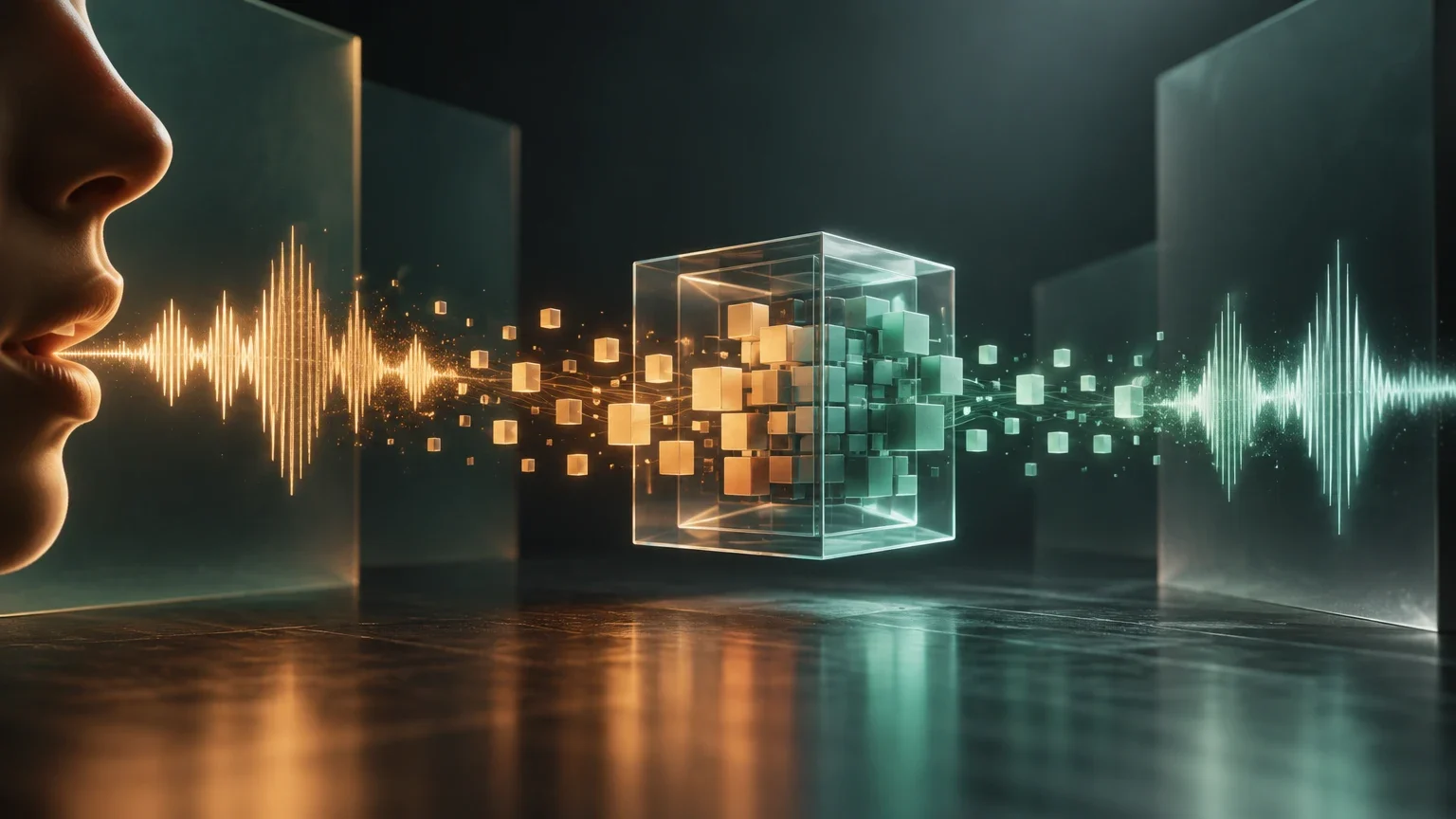
Neural codec with about 74 million parameters that encodes speech into discrete tokens and decodes them into audio. Liquid AI presented it independently on November 12; it was already part of LFM3-Audio and LFM3-Omni. It does not convert text to speech on its own.
01 / SUMMARY
The essential
Maximum input capacity when published by the source.
Documented maximum generation limit.
Verified availability channels.
Primary functional family and verified specialties.
Declared terms for API access, model weights, or self-hosting.
02 / TECHNICAL SHEET
Limits and integration
| API ID | LiquidAI/Liquid-Codec |
|---|---|
| Model type | Audio |
| Access model | Downloadable weights |
| License | LFM Open License v1.0 · conditional commercial use |
| Deployment | Self-hosted |
| Release | 12 NOV 2026 |
| Knowledge cutoff | Not published |
| Entrance | Audio · Audio tokens |
| Exit | Audio tokens · Audio |
| Context window | 24 kHz mono speech; 12.5 Hz frames with twelve codes per frame |
| maximum output | Discrete codes and reconstructed speech; approximately 1.65 kbps |
| Reasoning | Not published |
| Published tools | |
| Structured Outings | Not published |
| Batch processing | Not published |
| Prompt cache | Not published |
| Fine-tuning | Not published |
| Verified platforms | Hugging Face · Transformers |
Tokenize and reconstruct speech in local systems with streaming encoding and decoding. Its twelve codebook groups can be predicted in parallel. It accepts 24 kHz mono speech; it is neither a conversational assistant nor a transcriber.
Evaluations cover speech and do not establish quality for music, singing or environmental sounds. The BF16 repository includes custom code: review the implementation and pin a revision before loading it. Quantized decoders are integrated into LFM3 GGUF distributions, not separate checkpoints in this repository.
03 / CAPABILITIES
What it can do
Orientation
Tokenize and reconstruct speech in local systems with streaming encoding and decoding. Its twelve codebook groups can be predicted in parallel. It accepts 24 kHz mono speech; it is neither a conversational assistant nor a transcriber.
Context
24 kHz mono speech; 12.5 Hz frames with twelve codes per frame · Discrete codes and reconstructed speech; approximately 1.65 kbps
Tools and integration
Not published
Access
Hugging Face · Transformers
Input modalities
AudioAudio tokens
04 / PRICES
Documented cost
| Concept | Worth | Unit/condition |
|---|---|---|
| Standard input | Not published | Standard API rate |
| Cached input | Not published | Reading reused prefixes |
| Cache write or storage | Not published | The condition varies by provider |
| Standard output | Not published | May include reasoning tokens |
| Batch input | Not published | Asynchronous processing |
| Batch output | Not published | Asynchronous processing |
No hosted API tariff is verified; local deployment consumes compute. LFM Open License v1.0 conditions commercial use on an annual revenue threshold of USD 10 million. Review its terms; this is neither Apache 2.0 nor unconditional commercial permission.
i Prices change and may depend on level, region or context length. Check the source before making a decision.
05 / EVALUATIONS
How to read the results
“
Published speed measurements use FP32 and one Apple M4 Max CPU thread. Lower RTF values mean faster processing and are not full-application latency. ViSQOL 4.319 measures BF16 reconstruction on English LibriSpeech test-clean, not TTS generation or an average across languages.
| Benchmark | Result | Metric | Source |
|---|---|---|---|
| Encoding RTF (Apple M4 Max, FP32) | 0,0028 | RTF · lower is better | View source ↗ |
| Decoding RTF (Apple M4 Max, FP32) | 0,0115 | RTF · lower is better | View source ↗ |
| ViSQOL (LibriSpeech test-clean, BF16) | 4,319 | ViSQOL · higher is better | View source ↗ |
Inferama only highlights a “best result” when the metric, test set, configuration, and date allow for an equivalent comparison. The supplier's figures are presented as claims from its own source.
06 / VERSIONS
Chronology
LiquidAI/Liquid-Codec
Standalone publication of the codec already used by LFM3-Audio and LFM3-Omni; repository creation is not the announcement date.
ANALYSIS
Related analysis
07 / SOURCES