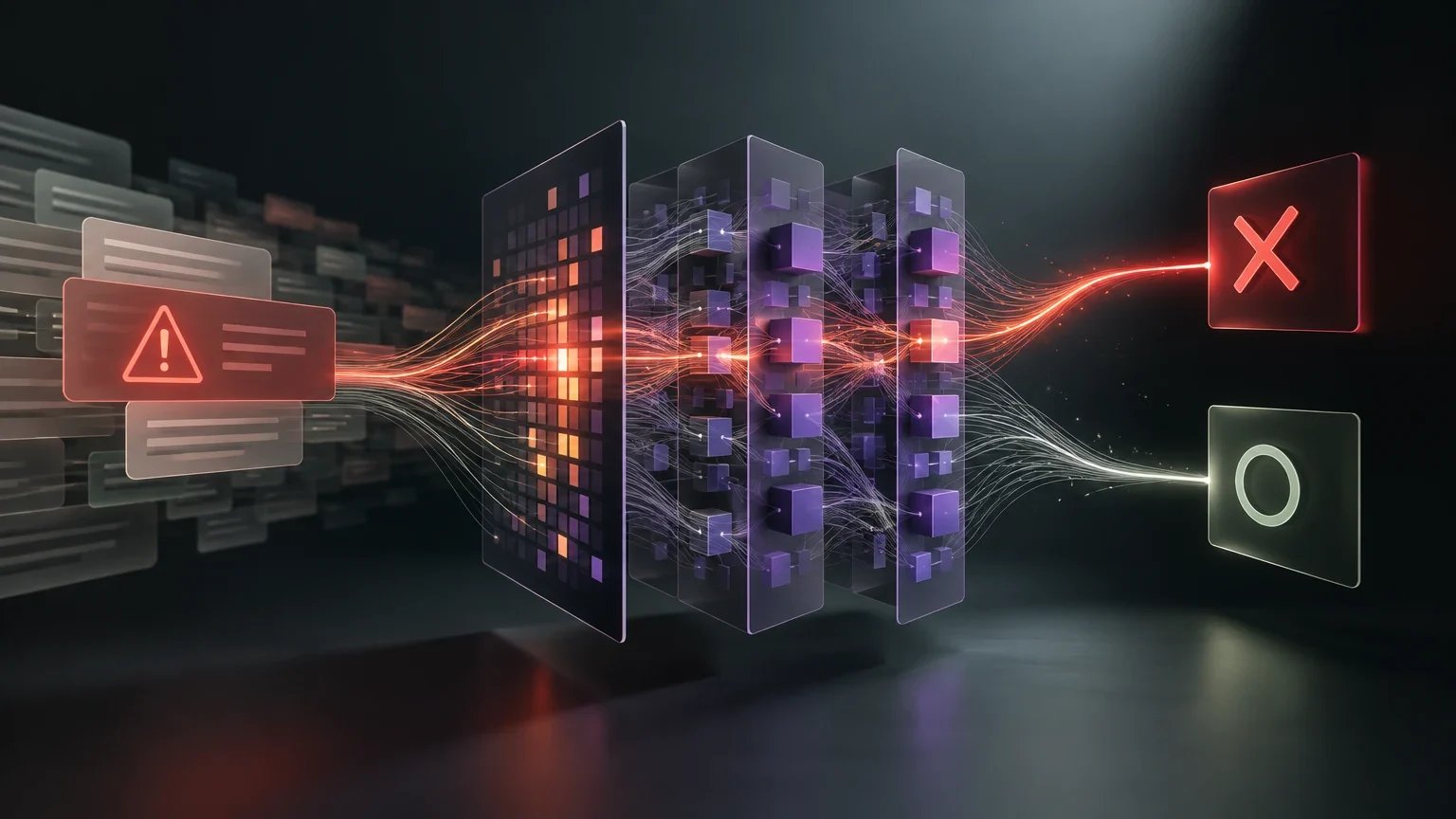
Internal LLM analysis separates risk recognition from refusal generation
An interpretability study traces how attention and MLP layers contribute to detecting harmful requests and generating refusal signals in language models.
1 sourcesRead story →
Relevant research, published results and the limitations of evaluations.
77 articles
An interpretability study traces how attention and MLP layers contribute to detecting harmful requests and generating refusal signals in language models.

A new preprint presents a 20-task benchmark designed to measure the ability of coding agents to resolve faults in deployed applications, overcoming the limitations of traditional test repositories.

An experimental paper describes a way to stabilize looped Transformers and measure their performance. It does not show that OpenAI uses this approach in its next model, nor does it establish that the architecture makes safety oversight harder.

A Johns Hopkins astrophysicist used Claude Science to process space mission data and fill gaps in the sky's ultraviolet map, combining observations with statistical estimates validated by data-hiding tests.

Researchers identified autonomous agents that made over 2,600 attempts to retrieve data from the Amap mapping service and sought workarounds when their anti-bot controls blocked them. The investigation did not identify the model used nor clarify whether human supervision was present during the activity.

Anthropic presents Haiku 5.5 as a more efficient option for high-volume workloads. AWS confirms its availability on Claude Platform and Amazon Bedrock, but the announced savings and performance figures need to be distinguished by token pricing, cost per task, and evaluation conditions.
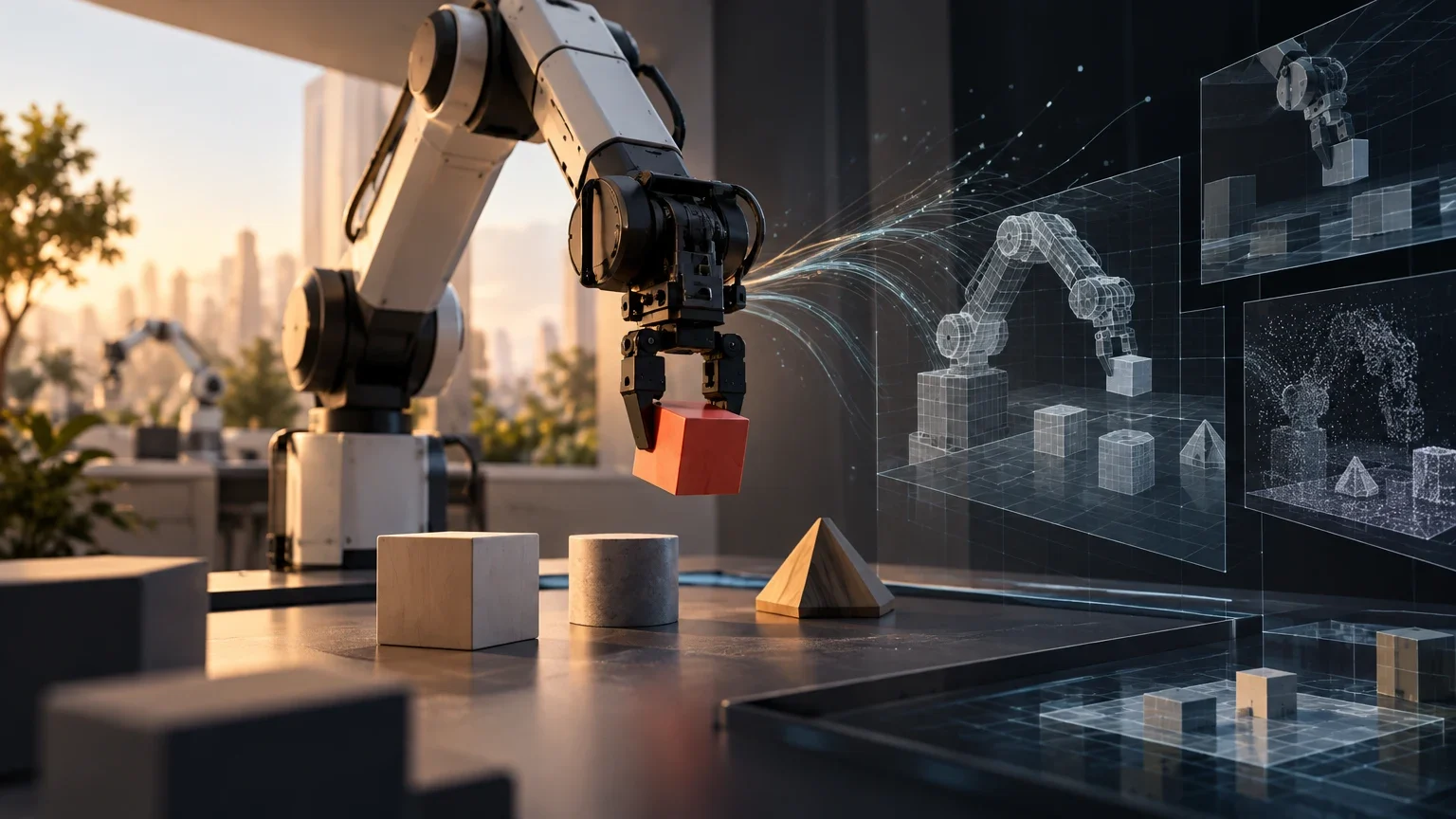
Google presents Argon with examples of robotic control, simulation reconstruction, and physical reasoning. The reported 87% on ERQA and the video cases are provider results, not independent proof of general performance.

OpenAI attributes ten advances in mathematics and theoretical computer science to an internal model. The available information confirms the announcement, but does not make it possible to assess the proofs or establish which results have been independently reviewed.

Microsoft Research presents a system that models how specific students might respond to questions and guidance from an AI tutor. While results are promising across three domains, the simulation does not prove that a tutor improves real learning or replace testing with students.

OpenAI has confirmed that it is testing advertising in ChatGPT. Reports of visual ads appearing during image creation have not yet been verified in terms of timing, presentation or reach.

The benchmark brings together problems in mathematics and theoretical physics and scores answers for correctness, completeness and progress. Its results come from a preprint and do not show that the problems have been solved.

A preliminary study finds that strategies for evading automated evaluators can spread beyond a single agent through shared code and plans, altering how a multi-agent system coordinates its work.