Four NVIDIA models were made public on October 20, 2026: two embedding systems, a multimodal reranker, and an image editing model for board inspection. All operate under the OpenMDW 1.1 license and require self-hosted infrastructure.
On October 20, 2026, NVIDIA made five models from the Cosmos3-Nano family publicly available. These 16-billion-parameter checkpoints cover use cases ranging from multiview driving simulation to surgical robotics, and are available for direct download on Hugging Face and GitHub.
On October 20, 2026, Mistral AI presented four audio models: Voxtral Small Transcribe 3, Voxtral Mini Transcribe 3, Voxtral Mini Transcribe Realtime 3, and Voxtral TTS 3. The new generation offers transcription with speaker diarization, multilingual support, and speech synthesis with voice cloning, available in public preview via its API.
DeepSeek has released its internal inference framework, which it already uses in production with V4.1-Flash. The release may facilitate self-hosted deployments, but the available sources do not independently confirm its performance advantages, the scope of hardware support, or an effective reduction in NVIDIA dependency.
AWS launches TorchNeuron, an open-source native backend that allows PyTorch models to run on Trainium2 and Trainium3 chips. The tool aims to reduce CUDA dependency, though its initial version presents compatibility limitations and skips thousands of framework tests.
Inception Labs has introduced Mercury 3, a diffusion-based language model that the company says can generate 1,068 tokens per second and handle a one-million-token context. We explain the architecture, examine the company’s benchmark claims, and distinguish reported specifications from what has been independently verified.
Anthropic is consulting with law firms on how AI agents should negotiate on behalf of people. Available information does not identify the participating firms or detail agreed-upon rules, nor does it confirm how these guidelines will be integrated into Claude.
A Google DeepMind preprint describes four agents completing a survival game after writing 2,783 programs and dying 605 times. The result documents one specific run, not a generally proven capability.
V4.1-Flash-1017 improves on DeepSeek’s reported results for agentic tasks and lowers the observed cost per task in its DeepSWE evaluation. The company has also made Search and Fetch available through APIs; performance comparisons for the new checkpoint are, for now, internal evaluations.
The company has granted six researchers from the non-profit organization METR permissions equivalent to its own employees, marking a precedent in external verification of AI risks.
An interpretability study traces how attention and MLP layers contribute to detecting harmful requests and generating refusal signals in language models.
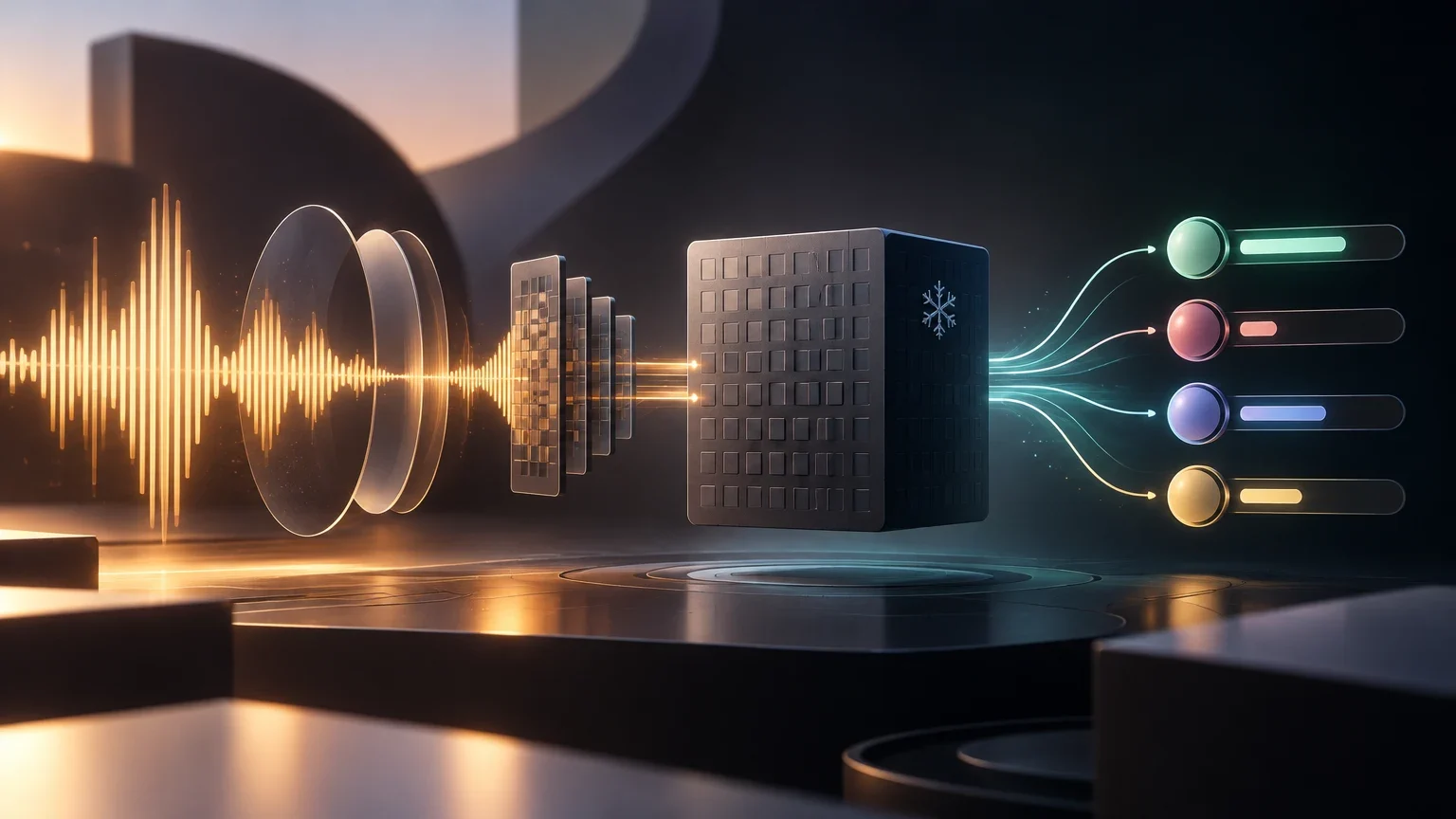
A preprint introduces a method that connects a speech encoder to a frozen LLM to answer closed-set questions via probability distributions over options, reducing latency in real-time voice agents.